language

Search

 中文简体
中文简体 English
 Español
 عربى
عربى Indonesia
Inquiry Now 
When you are sourcing a leather-look material for a new sofa line, a luggage collection, or a vehicle interior, the decision usually comes down to cost, durability, and how well the material behaves in daily use. PVC synthetic leather answers that brief: it is a durable, low-cost sheet material made by bonding a polyvinyl chloride (PVC) coating to a textile backing, and it delivers a convincing leather appearance without the price of genuine hide. This guide explains what PVC synthetic leather is, how it is manufactured, how it compares with PU leather and real leather, and what to check before you commit to a supplier.
PVC synthetic leather, also known as vinyl leather, leatherette, or faux leather, is a man-made composite with two functional parts: a surface layer of PVC resin and a supporting fabric substrate, usually polyester or a non-woven textile. The PVC layer contains plasticizers for flexibility, stabilizers for heat and light resistance, pigments for color, and, where required, flame retardants. The fabric base gives the material strength and dimensional stability.
Because the composition contains no animal components, PVC synthetic leather is a vegan-friendly alternative to genuine leather. Its position in the market is straightforward: it delivers the most frequently needed benefits of leather — appearance, cleanability, and resistance to wear — at a fraction of the cost, with consistent quality across large production volumes.
Most commercial PVC synthetic leather is produced by the release paper casting method, a process that explains how the material can imitate fine grains and decorative textures so convincingly.
Texture and performance are therefore controlled by two variables: the release paper, which determines appearance, and the chemical formulation, which controls flexibility, flame resistance, and behavior in heat and cold. A manufacturer tunes the formulation for the target application — softer grades for sofas, tougher grades for automotive seats and luggage.
For procurement and engineering teams, the value of PVC synthetic leather comes down to measurable performance.
Limitations deserve equal honesty. PVC synthetic leather is less breathable than PU leather and real leather, which can be a drawback for seating that stays in contact with skin for long periods. In extreme cold, poorly formulated grades can stiffen and crack, so a low-temperature flexibility test should be specified for cold-climate markets.
Because the formulation can be adjusted, PVC synthetic leather serves a wide range of industries, each of which emphasizes a different set of properties.
Residential and contract furniture uses PVC leather for its abrasion and stain resistance and its flame compliance. Family sofas, office seating, and hospitality furniture benefit from a surface that tolerates spills and constant traffic.
Door panels, seat inserts, and dashboard wraps face sunlight, heat, and wear, and must meet stringent flammability limits such as FMVSS 302. PVC synthetic leather meets these requirements at a much lower cost than genuine hide. The high-wear-resistant PVC car interior leather is one example engineered specifically for this segment.
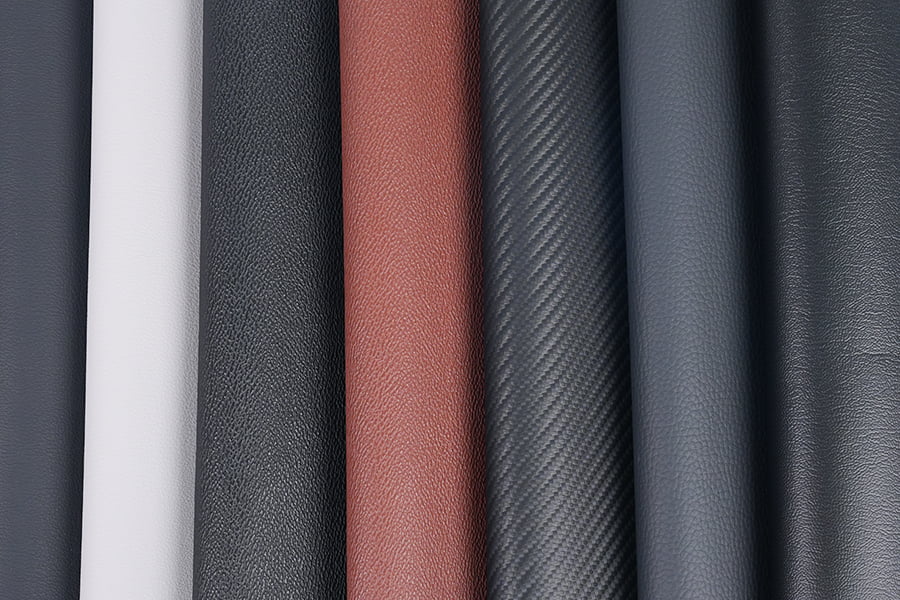 Wholesale High Wear-Resistant PVC Car Interior Leather Suppliers, Factory - DongDongtai Fuan Synthetic Materials Co., Ltd is China wholesale High Wear-Resistant PVC Car Interior Leather suppliers and factory,High wear...View Product →
Luggage requires light weight, scratch resistance, and an attractive surface. Embossed patterns such as crocodile grain give suitcases and bags a premium look without the weight or price of animal leather. A strong product reference is the high-quality PVC crocodile leather for luggage, designed to resist scuffs during normal airport handling.
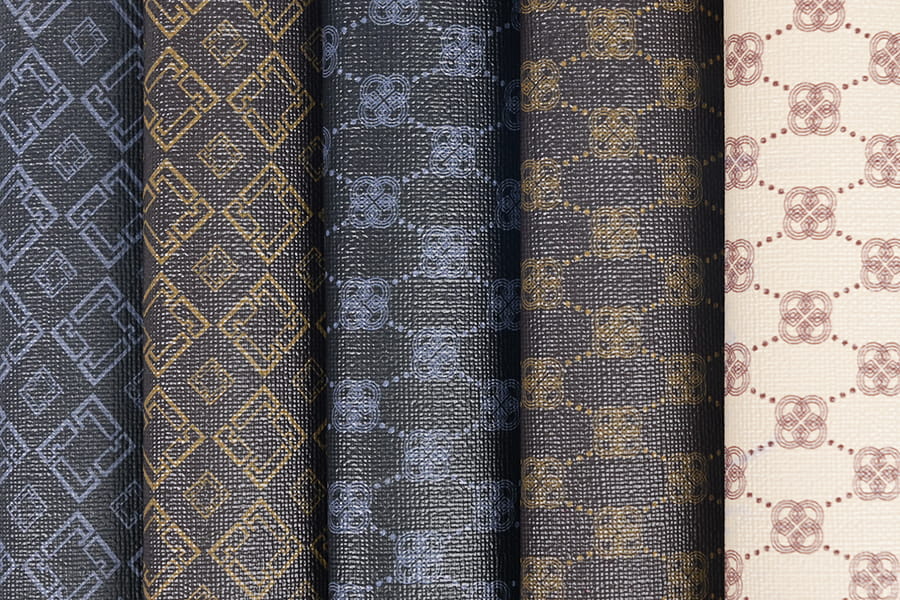 Wholesale PVC High-Quality Crocodile Leather Luggage Artificial Leather SupplierDongtai Fuan Synthetic Materials Co., Ltd is China wholesale PVC High-Quality Crocodile Leather Luggage Artificial Leather suppliers and ...View Product →
Footwear brands choose PVC synthetic leather for waterproofing, easy wiping, and color consistency across large pairs. It is a cost-effective option for fashion shoes, work shoes, and children's footwear, where durability and easy maintenance matter as much as appearance.
Gym and massage equipment must withstand sweat, frequent wiping, and cleaning agents, which makes PVC's water resistance and cleanability a natural fit. Some grades are additionally formulated to be flame-retardant, such as the sweatproof and fire-retardant faux leather for fitness equipment.
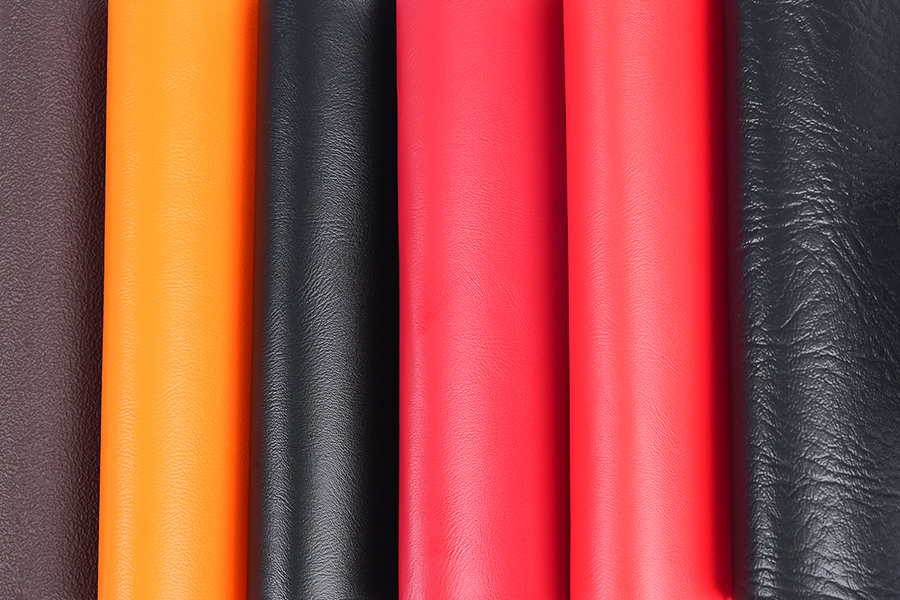 Wholesale Sweat-Proof Fire-Retardant Faux Leather for Fitness Equipment SupplierDongtai Fuan Synthetic Materials Co., Ltd is China wholesale Sweat-Proof Fire-Retardant Faux Leather for Fitness Equipment suppliers and ...View Product →
Wall panels, headboards, and decorative surfaces use PVC leather for its soft texture, color consistency, and low maintenance. Low-odor and environmentally friendly decorative grades are increasingly specified for indoor projects.
The most common question is how PVC compares with PU synthetic leather and genuine leather. The honest answer is that no material is universally best; the right choice depends on your application, budget, and performance targets.
| Criterion | PVC Synthetic Leather | PU Leather | Real Leather |
|---|---|---|---|
| Cost | Lowest | Moderate | Highest |
| Softness | Firm; adjustable with plasticizers | Softer, closer to a leather feel | Natural and supple |
| Breathability | Low | Moderate | High |
| Durability | Excellent abrasion and water resistance | Good, but moisture can damage the coating | Durable, yet requires conditioning and can crack |
| Appearance consistency | Very consistent across rolls | Consistent | Natural markings vary from hide to hide |
| Environmental profile | Chlorine chemistry and plasticizer concerns; modern low-VOC versions available | Petroleum-based, generally fewer plasticizer concerns | Animal-based; higher land and water footprint per unit area |
Direct comparison shows that PVC and PU differ mainly in hand feel and breathability: PU feels softer and breathes better, while PVC wins on water resistance, washability, and price. Genuine leather offers unmatched natural beauty and breathability, but it needs regular care, varies from hide to hide, and costs considerably more. For brands with an animal-free policy, both PVC and PU leather also avoid the ethical concerns connected to slaughter-based leather. If you need a soft, breathable upper for premium footwear, PU may justify its higher price. If you need a tough, cleanable, flame-retardant surface on a large production budget, PVC synthetic leather is difficult to beat. For a deeper analysis of the two synthetic materials, read our full explanation of the differences between PVC and PU artificial leather.
The environmental record of PVC deserves an honest discussion. Traditional PVC production relies on chlorine chemistry, some plasticizers — especially phthalates — have raised health concerns, and standard PVC synthetic leather is not biodegradable. These are legitimate points that any serious buyer should evaluate.
The industry has responded with concrete improvements. Modern grades use phthalate-free plasticizers, low-VOC stabilizers, and formulations that reduce emissions during production and use. Some manufacturers are developing recyclable and bio-based synthetic leather alternatives to broaden the choice beyond conventional PVC. At the same time, regulations such as the EU REACH and RoHS directives set strict limits on restricted substances, pushing suppliers to reformulate and document their compliance.
For a buyer, the practical step is to request the documents: REACH and RoHS certificates, VOC emission data, and phthalate test results are the evidence that matters. Suppliers that position eco synthetic leather and environmental decorative leather as high-tech products are contributing to a wider shift toward lower-impact PVC.
Quality differs significantly between suppliers. Weak adhesion, plasticizer migration, and failed flammability tests all show up in low-grade material. These specifications separate dependable stock from problematic stock.
| Quality indicator | What it tells you | What to look for |
|---|---|---|
| Total thickness and weight (g/m²) | Material substance and strength | Set a minimum weight for your application; heavier grades for seating |
| Abrasion resistance (Martindale or Taber cycles) | Surface resistance to wear | High grade reaches up to 100,000 cycles; 50,000 is a reasonable floor for busy furniture |
| Peel strength | Bond between the PVC layer and the fabric base | One-piece behavior with no layer separation on sharp bends |
| Low-temperature flexibility | Resistance to cracking in cold climates | Material passes a bend test at -10 °C or lower for cold markets |
| Flame retardance | Safety compliance for seating and interiors | Certification to FMVSS 302, BS 5852, or CA 117 as applicable |
| Plasticizer migration and aging | Long-term stability of the surface | Low migration values and no sticky surface after accelerated aging |
Screen suppliers with a few direct questions:
Do not rely on a data sheet alone. Order samples, run your own abrasion and peel tests, and confirm that the production batch matches the trial material. A supplier that shares detailed test data and supports sample validation is usually the more reliable long-term partner.
PVC synthetic leather is not a luxury material, and it does not pretend to be. It is a practical workhorse: durable, cleanable, flame-resistant, rich in texture options, and affordable enough for high-volume production. Its main limitation — lower breathability — is well understood and can be managed through correct specification.
Define your application, set your performance and compliance targets, and compare materials against those numbers rather than against marketing claims. As a manufacturer with production experience since 2007 and an annual capacity of 20 million square meters, 东台市富安合成材料有限公司 supplies synthetic leather for sofas, automotive interiors, luggage, footwear, fitness equipment, and interior decoration, with laboratory testing behind every grade. Start by reviewing the product series that matches your end use, and request samples before finalizing your specification.
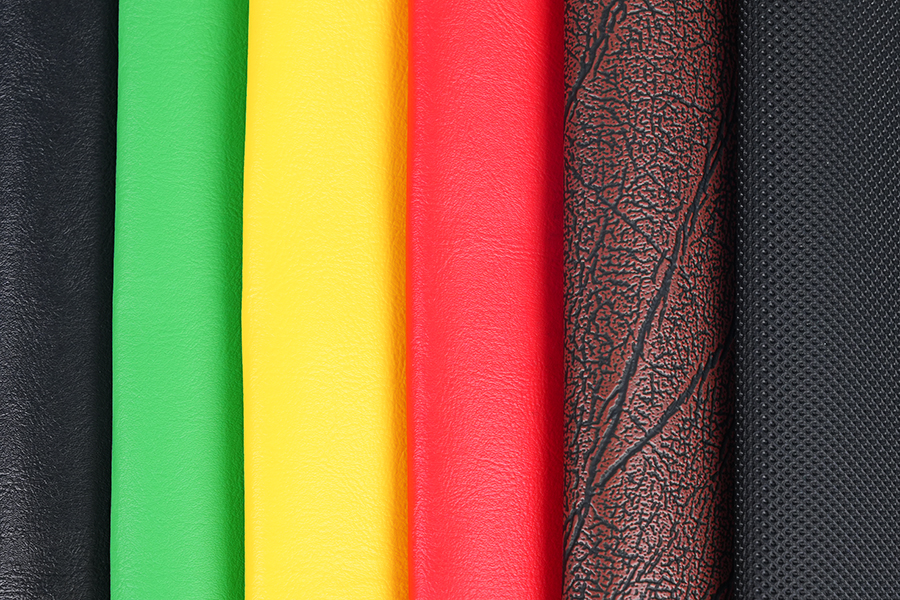
The Versatility of Sofa Artificial Leather in Different Home Decor Styles Sofa artificial leather has gained significant popularity as a material for home furniture, owing to its impressive versatilit...
View MoreIntroduction to Synthetic Leather What is Synthetic Leather? Definition and overview: Synthetic leather, also known as faux leather, vegan leather, or artificial leather, is a man-made material desig...
View MorePVC (Polyvinyl Chloride) and PU (Polyurethane) are two popular materials used in the production of automotive synthetic leather, each with its unique characteristics. Below are the key differences: Ma...
View MoreIntroduction of Synthetic Leather for Shoes What Is Synthetic Leather? Synthetic leather refers to any man-made material designed to imitate the appearance, texture, and qualities of genuine leather. ...
View MoreCopyright © Fu'an Synthetic Materials Co.,Ltd. Rights Reserved.
 Privacy
Custom PVC Synthetic/Artificial Leather Manufacturers
Privacy
Custom PVC Synthetic/Artificial Leather Manufacturers