language

Search

 中文简体
中文简体 English
 Español
 عربى
عربى Indonesia
Inquiry Now 
A furniture manufacturer asked us recently whether PVC leather was a separate material from faux leather. The confusion is understandable, because the two terms are often treated as parallel options. They are not. Faux leather is an umbrella term for any synthetic material designed to imitate animal leather, and PVC leather is one member of that family, alongside PU, microfiber, silicone, and bio-based types.
The relationship is simple: all PVC leather is faux leather, but not all faux leather is PVC leather. Comparing "PVC vs faux leather" therefore matches a single material against an entire category, which produces misleading conclusions. The useful question is narrower: is PVC better than PU for my sofa line, or is PVC the right material for automotive seating?
The main subtypes differ in coating chemistry and backing construction, and those differences drive performance:
| Faux Leather Type | Coating / Core | Typical Backing | Key Characteristics |
|---|---|---|---|
| PVC leather | PVC resin with plasticizers | Polyester, cotton, or blends | Dense, water-resistant, abrasion-resistant, low cost |
| PU leather | Polyurethane coating | Woven or knitted fabric | Softer, more breathable, leather-like feel |
| Microfiber leather | PU-impregnated microfiber | High-density microfiber | Strong, soft, highly durable |
| Silicone leather | Silicone coating | Various fabrics | Heat-resistant, stain-resistant |
| Bio-based leather | Plant-derived polymers | Various fabrics | Lower environmental footprint, emerging |
Why does this matter for purchasing? Once the categories are clear, you stop comparing a material against its entire category and start comparing materials that actually compete. For most buyers, that means PVC vs PU.
The manufacturing process explains most of the performance gap between PVC and other faux leathers. PVC leather starts from PVC resin, plasticizers, stabilizers, and colorants, mixed into a paste, coated or calendered onto a backing fabric, then embossed and finished. PU leather is made by applying a polyurethane coating, often with a release-paper process that prints a grain pattern. Microfiber leather impregnates a high-density microfiber base with PU, creating a structure closer to genuine leather's fiber network.
These structural differences are not cosmetic. PVC coatings are thicker and denser, which is why PVC excels at abrasion and water resistance. PU coatings are thinner and more flexible, which gives better softness, drape, and breathability. As a manufacturer producing PVC synthetic leather at a scale of roughly 20 million square meters per year, we see these tradeoffs daily across furniture, automotive, luggage, footwear, and fitness equipment programs.
Why do some PVC leathers feel soft while others feel stiff? The answer is usually the plasticizer system. Plasticizers make PVC resin flexible, and their amount and type determine softness, cold resistance, and durability. More plasticizer means softer leather, but also weaker tensile strength and a higher risk of plasticizer migration, which leaves the surface dry or sticky over time.
High-quality PVC leather uses low-volatility plasticizers that stay in the coating for years, while cheap formulations use volatile plasticizers that migrate, causing hardening and cracking. Two rolls of PVC leather can look identical and perform completely differently because of what is inside the coating. When a supplier quotes a very low price, question the formulation first.
Once the terminology is settled, the comparison most buyers actually need is PVC vs PU, because PU is the most common alternative inside the faux leather category. Six dimensions matter most in sourcing decisions.
Abrasion resistance: PVC generally wins. High-wear PVC formulas developed for automotive seating survive years of repeated friction without wearing through, while PU scuffs more easily on seams and edges.
Water and stain resistance: PVC's dense, low-absorption coating gives it a natural advantage. Liquids bead on the surface and most stains wipe clean. PU can be finished with stain-resistant top coats, but its base structure is more absorbent.
Breathability: PU wins clearly. Its coating lets air and moisture vapor pass through, while standard PVC does not, though modern treatments can partially improve this.
Hand feel and appearance: PU is softer and closer to genuine leather, and its thin coating permits fine grain patterns. PVC has improved significantly; modern embossing reproduces textures such as crocodile grain convincingly, at a fraction of PU's cost.
Weather and aging: Both materials have weak points. UV exposure drives plasticizer migration in PVC, causing hardening and cracking. PU can hydrolyze in hot, humid climates and break down from within. The better choice depends on your product's environment.
Cost: PVC's raw material and processing costs are typically lower, so the per-meter price is usually lower. A total-cost-of-ownership view matters more: if a PVC part lasts twice as long as a cheaper PU alternative, PVC is usually the better investment.
| Dimension | PVC Leather | PU Faux Leather |
|---|---|---|
| Abrasion resistance | Stronger, especially in high-wear formulas | Moderate; scuffs at edges |
| Water and stain resistance | Excellent; low absorption | Good with top coat; more absorbent |
| Breathability | Low | Higher |
| Hand feel and appearance | Firmer; modern textures realistic | Softer; closer to natural leather |
| Weather and aging | Plasticizer migration under UV | Hydrolysis in hot, humid climates |
| Relative cost | Lower material and processing cost | Higher material cost |
For a deeper technical comparison, see our detailed comparison of PVC and PU artificial leather, which covers formulation and testing differences.
For sofas facing heavy daily use, children, pets, or food spills, PVC is often the smarter call. It resists water, stains, and abrasion better than most PU products, and cleaning is simple. The same logic applies to commercial seating in offices and waiting rooms, where maintenance costs add up. If the priority is a premium residential sofa with a soft, breathable surface, PU justifies its higher cost. When comparing options, ask about flame retardancy and stain-resistant top coats; many synthetic leather options for sofa upholstery include these finishes.
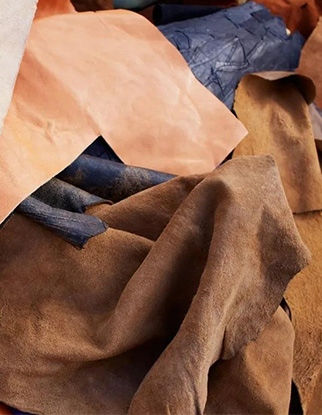 PVC Synthetic Leather for Sofa Upholstery Manufacturers, SuppliersAs China synthetic leather for sofa manufacturers and OEM/ODM sofa faux leather suppliers, Fuan Synthetic Materials Co., Ltd custom PVC l...View Product →
Automotive seating is one of the toughest applications for upholstery. It must survive years of friction from passengers, temperature swings from freezing winters to hot summer cabins, and strict limits on odor and VOC emissions. High-wear PVC formulations are engineered for this environment, offering strong abrasion resistance, easy cleaning, and lower cost than automotive-grade PU, which is why so many mid-range vehicles use PVC interiors. When sourcing seating, door panels, or armrests, ask for anti-UV, low-VOC PVC formulas, such as our high-wear-resistant PVC car interior leather, and request the test reports.
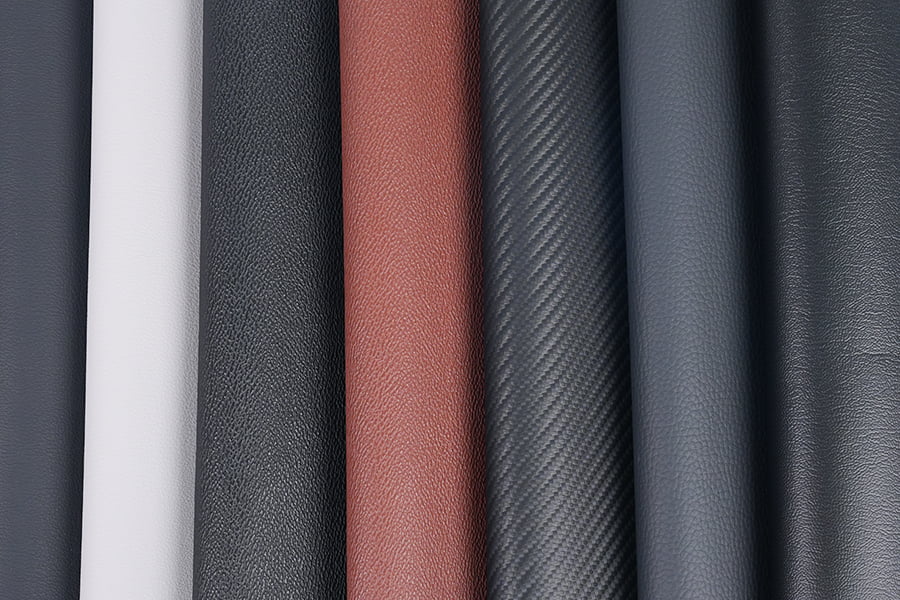 Wholesale High Wear-Resistant PVC Car Interior Leather Suppliers, Factory - DongDongtai Fuan Synthetic Materials Co., Ltd is China wholesale High Wear-Resistant PVC Car Interior Leather suppliers and factory,High wear...View Product →
Luggage demands light weight, scratch resistance, and a surface that still looks good after dozens of trips. PVC delivers all three. Its dense coating resists scuffs, and modern embossing reproduces textures such as crocodile grain. Our PVC crocodile-pattern luggage leather is a good example of PVC texturing. PU remains the better choice for high-end fashion bags where a soft, natural leather hand is the selling point, but it is more vulnerable to scratching and edge wear. For travel luggage that gets tossed around, PVC usually wins.
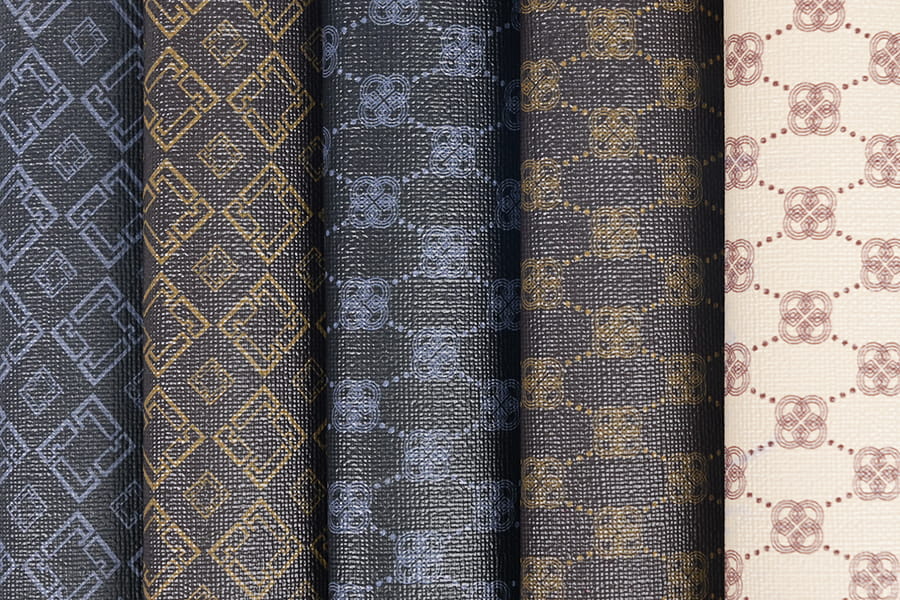 Wholesale PVC High-Quality Crocodile Leather Luggage Artificial Leather SupplierDongtai Fuan Synthetic Materials Co., Ltd is China wholesale PVC High-Quality Crocodile Leather Luggage Artificial Leather suppliers and ...View Product →
Shoe uppers need flexibility, breathability, and elastic recovery, so PU and breathable synthetic blends handle these better than standard PVC, which is why PVC is rarely used for main shoe panels. PVC still makes sense for waterproof outer layers, work boot overlays, and abrasion-heavy areas. Fitness equipment is different: gym machines face sweat, frequent wiping, and heavy contact, and they do not need breathability. PVC's water resistance, combined with sweat-resistant and flame-retardant formulations, makes it a practical choice for treadmill handles, bench pads, and similar parts.
The environmental reputation of PVC is genuinely complicated. Traditional formulations contain chlorine and phthalate plasticizers, some of which have raised health concerns, leading to strict regulations in the EU and elsewhere. That reputation belongs to older chemistry. Modern PVC synthetic leather can be produced with phthalate-free plasticizers, low-volatility stabilizers, and odorless formulations, and many products meet REACH and RoHS requirements. PU is not free of environmental issues either: its production involves isocyanates, and most PU leathers are no more biodegradable than PVC. The honest conclusion is that no synthetic material is inherently green. What matters is the specific formulation and its certifications, so ask for VOC test reports, plasticizer compliance declarations, and REACH or RoHS documentation.
To avoid sourcing the wrong material, go into your first inquiry with specific questions. A qualified supplier should be able to answer most of them with data rather than vague reassurance:
If a supplier answers with only "meets industry standards," treat that as a red flag and ask for the standard name and measured values.
So, is PVC leather better than faux leather? The question, as asked, is logically flawed. Faux leather is the category; PVC is one member. The meaningful comparisons are PVC vs PU, PVC vs microfiber, or PVC vs silicone, and the answer always depends on the application.
The practical conclusion is this: if your product needs strength, water resistance, easy cleaning, and cost control, and breathability is not decisive, PVC is usually the better choice. That covers commercial sofas, automotive interiors, luggage, and fitness equipment. If your product sells on softness, breathability, and premium feel, PU or another faux leather type will serve you better, which covers high-end residential sofas and fashion handbags.
Use the application guidance above to shortlist options, then take the supplier checklist to your next inquiry. The right material matches your product's real operating conditions, not the better-sounding name.
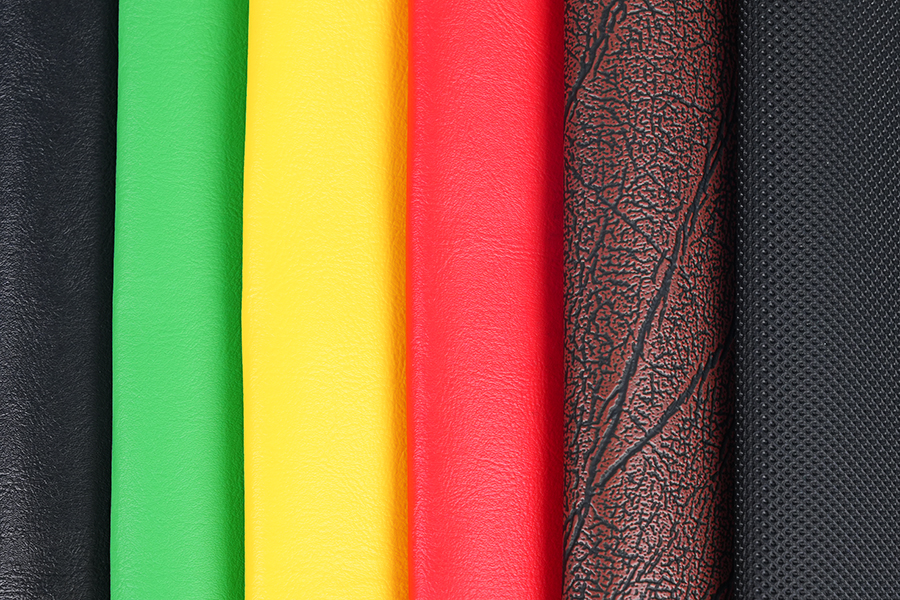
The Versatility of Sofa Artificial Leather in Different Home Decor Styles Sofa artificial leather has gained significant popularity as a material for home furniture, owing to its impressive versatilit...
View MoreIntroduction to Synthetic Leather What is Synthetic Leather? Definition and overview: Synthetic leather, also known as faux leather, vegan leather, or artificial leather, is a man-made material desig...
View MorePVC (Polyvinyl Chloride) and PU (Polyurethane) are two popular materials used in the production of automotive synthetic leather, each with its unique characteristics. Below are the key differences: Ma...
View MoreIntroduction of Synthetic Leather for Shoes What Is Synthetic Leather? Synthetic leather refers to any man-made material designed to imitate the appearance, texture, and qualities of genuine leather. ...
View MoreCopyright © Fu'an Synthetic Materials Co.,Ltd. Rights Reserved.
 Privacy
Custom PVC Synthetic/Artificial Leather Manufacturers
Privacy
Custom PVC Synthetic/Artificial Leather Manufacturers