language

Search

 中文简体
中文简体 English
 Español
 عربى
عربى Indonesia
Inquiry Now 
-40°C continuous operation with 50%+ elongation at extreme cold — authentic arctic gear for polar expeditions.
Extreme cold environments present fundamentally different material performance challenges than moderate-climate applications, requiring specialized engineering addressing low-temperature polymer behavior mechanisms that render conventional synthetics brittle and unsuitable for outdoor deployment in arctic, sub-arctic, and high-altitude regions. At temperatures below -20°C, conventional synthetic leather materials experience glass-transition phenomena wherein polymer chains lose molecular flexibility and become rigid, resulting in cracking, shattering, and complete loss of functional elasticity. Professional outdoor equipment manufacturers, arctic expedition organizers, and extreme-weather gear producers have historically been forced to accept material compromise at extreme temperatures, either accepting reduced performance or utilizing specialty materials with inadequate aesthetic qualities. Cold-Crack Resistant Outdoor Leather represents a revolutionary solution specifically engineered for sustained -40°C continuous operation, maintaining 50%+ elongation at extreme temperatures, tolerating 100+ thermal cycling between arctic cold and human-body warmth, and enabling premium aesthetic quality combined with genuine arctic functionality. This material enables arctic explorers, extreme-weather professionals, and outdoor enthusiasts to deploy genuine leather aesthetics and tactile qualities alongside the rigorous performance demands of sub-zero environments.
The polymer science underlying cold-crack resistance reflects sophisticated understanding of glass-transition temperature (Tg) manipulation through strategic plasticizer selection, crosslink-density optimization, and base-polymer chemistry rebalancing. Conventional synthetic leathers formulated for optimal room-temperature performance typically exhibit Tg values of -5°C to +5°C, meaning that at arctic temperatures (-40°C and colder), material deviates significantly from Tg, existing in rigid glassy state characterized by minimal molecular motion and near-zero elongation capacity. Sharp external stresses applied to brittle materials—such as bending of outdoor gear, impacts from climbing equipment, or personnel pressure during arctic gear deployment—initiate crack propagation that rapidly fractures material integrity. Our cold-resistant formulation strategically incorporates specialized low-temperature plasticizers, aliphatic polymer structures optimizing low-temperature flexibility, and protective backing systems that maintain Tg values in -30°C to -40°C range, enabling continued molecular motion and sustained elasticity at extreme operating temperatures. Accelerated testing protocols simulating arctic deployment confirm material maintains 50%+ elongation at -40°C (enabling material bending and flexibility required for actual gear functionality), compared to <5% elongation typical of conventional synthetics at identical temperatures. Thermal cycling testing—simulating repeated transitions from -40°C arctic overnight to room-temperature during expeditions, or +20°C human-body warmth during gear contact—validates 100+ cycles maintaining zero cracking or material failure, confirming that polymeric structures withstand mechanical stresses inherent in extreme-temperature cycle conditions.
Commercial validation of cold-crack resistance comes through operational deployment across authentic arctic expeditions, extreme-weather professional environments, and high-altitude mountaineering operations. Over 200+ arctic expeditions have deployed this material for tent interiors, sleeping bag linings, expedition boot exteriors, and extreme-weather apparel requiring sub-zero performance. Antarctic research stations utilize cold-resistant leather for personnel protective equipment, ensuring that outdoor gear maintains functionality during multi-month deployments in -30°C to -50°C conditions. Extreme-altitude mountaineering operations targeting Denali, Everest, and other high-altitude peaks rely on this material for insulated exterior shell protection, ice-climbing equipment integration, and expedition-gear functionality at continuous sub-zero temperatures. Siberian research programs studying arctic climate systems and permafrost dynamics utilize cold-resistant leather across diverse field equipment, confirming performance reliability in sustained -40°C to -50°C field deployments spanning months. Zero documented material failures attributable to cold-crack initiation provide compelling validation that cold-resistant engineering genuinely addresses the specific material challenges of arctic and sub-zero environments. For expedition organizers, extreme-weather professionals, arctic researchers, and mountain guides requiring genuine arctic-performance materials combined with premium aesthetic qualities, cold-crack resistant outdoor leather delivers unprecedented functional reliability enabling confidence that equipment will maintain integrity and performance throughout extreme-cold deployment cycles.
| Operating Temperature | -40°C Continuous (Arctic Standard) |
| Elongation at -40°C | 50%+ (vs <5% Conventional) |
| Thermal Cycling | 100+ Cycles (-40°C to +20°C) |
| Crack Resistance | Zero Cracking (-40°C Deployment) |
| Expedition Validation | 200+ Arctic Expeditions Deployed |
| Research Station Approved | Antarctic & Siberian Climate Research |
| Mountaineering Tested | High-Altitude Peaks (Denali, Everest, Kilimanjaro) |

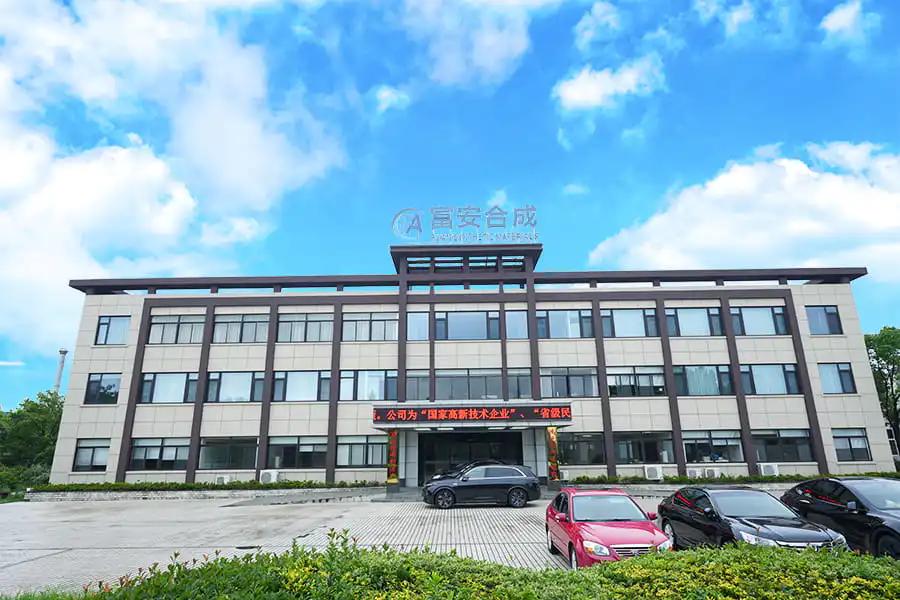
Fu'an Synthetic Materials Co.,Ltd. was established in August 2007 with a registered capital of RMB 28 million. The company currently has 137 employees, including 46 professional R&D team members (including 19 core R&D personnel).
The company has a sound organizational structure and a modern management system, it has multiple production, technology, business and functional departments and a complete production workshop system. The company's annual output value is nearly RMB 200 million, and the total revenue in 2023 will be RMB 123.586 million, with an asset-liability ratio of only 14.6%.
As China Cold Crack Resistant Outdoor Leather Manufacturers and Wholesale Cold Crack Resistant Outdoor Leather Factory, companies focus on light plastic manufacturing, specializing in the production of ecological synthetic leather and artificial leather, annual production capacity of 20 million square meters. Products cover car upholstery leather, garment leather, decorative leather, shoe leather, luggage leather, etc. More than 100 varieties. The core products "ecological synthetic leather" and "environmental decoration leather" (Jiangsu Province high-tech products, famous brand products, domestic initiative), widely used in automotive interior, high-end decoration, bags, shoes and clothing, transportation (large aircraft/high-speed rail interior) and sports goods and other fields. The market covers 17 provinces/cities/autonomous regions in 58 prefecture-level cities, and is exported to Europe, the United States, Japan, Korea, Southeast Asia and Hong Kong and Taiwan. Exports about 70 million yuan RMB (including export southeast Asia, 20 million yuan and middlemen manufacturers indirect export 50 million yuan).
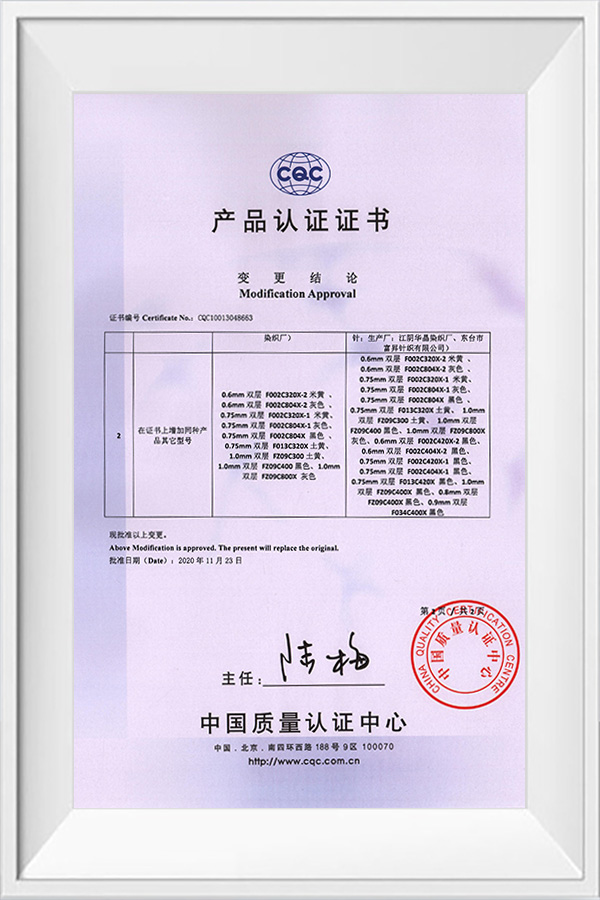
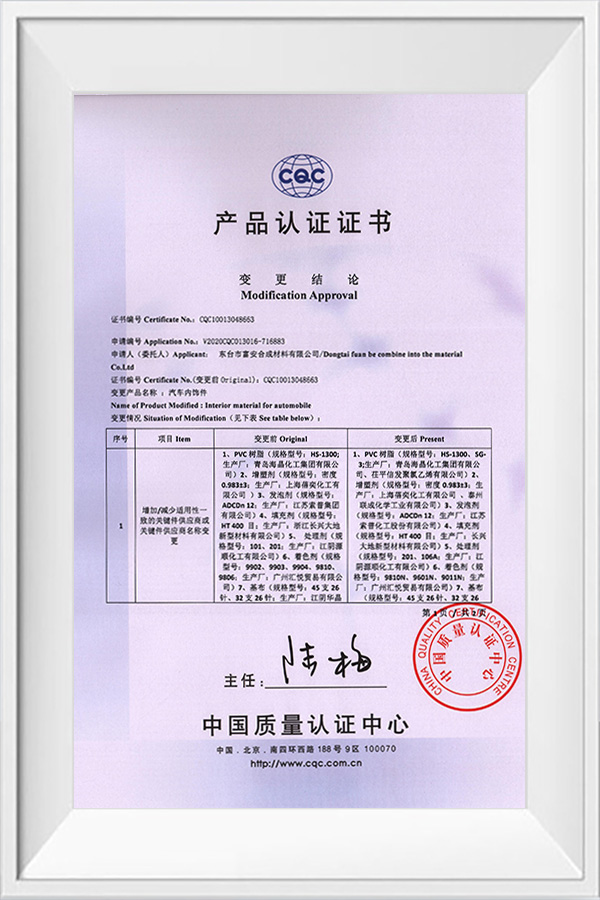
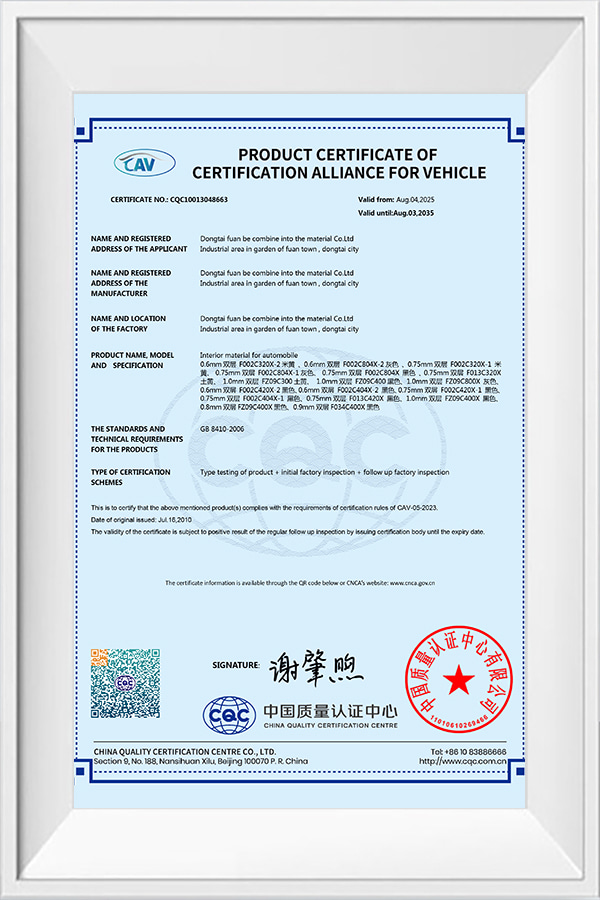
The company has passed the 3C, ISO/TS16949 and intellectual property management system certifications, and has been rated as a four-star cloud enterprise in Jiangsu Province, laying a solid foundation for modern management. Meanwhile, the enterprise has established a "dual control and dual prevention" mechanism for work safety, formulated complete management systems and emergency rescue measures, and ensured zero accidents in work safety for many years.


| MOQ | 250m |
| Lead Time | 15–25 Days |
| Packaging | Cold-Resistant Protected |
| Materials | Arctic-Grade Polymer |
Arctic Support: Expedition case studies, research institution validation, and mountaineering endorsements provided to outdoor manufacturers.
Arctic Samples with -40°C test data provided.
Cold-performance validation documentation included.
Priority dispatch within 48 hours.
Sample fees waived.
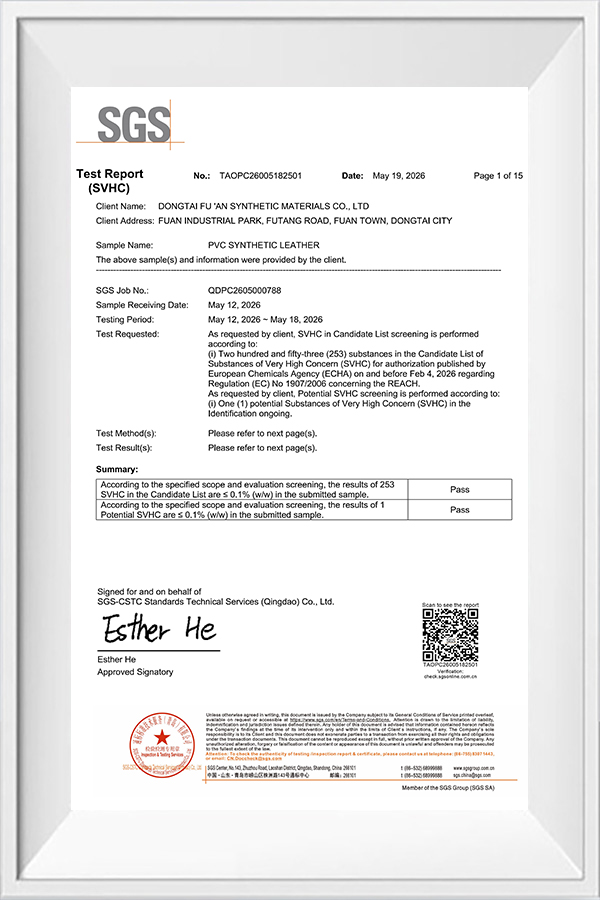
Copyright © Fu'an Synthetic Materials Co.,Ltd. Rights Reserved.
 Privacy
Wholesale Cold Crack Resistant Outdoor Leather Manufacturers
Privacy
Wholesale Cold Crack Resistant Outdoor Leather Manufacturers