language

Search

 中文简体
中文简体 English
 Español
 عربى
عربى Indonesia
Inquiry Now 
Ask fifty upholstery buyers what PVC synthetic leather is and you will get fifty variations of the same half-answer: cheap fake leather with a plastic feel. That description is not wrong, but it captures only the surface. Behind the three letters sits an engineered material system — a fabric core, a cellular cushioning layer, a polymer skin, and a protective finish — tuned differently for car seats, sofas, luggage, and gym benches. This guide explains what PVC synthetic leather actually is, how it is made, where it performs well, and how to judge quality before ordering.
PVC synthetic leather is a man-made sheet material produced by applying a polyvinyl chloride (PVC) resin compound onto a fabric backing and finishing the surface to imitate the look of natural leather. It is also sold under the names vinyl leather, leatherette, and pleather.
The difference from genuine leather starts with the raw material. Leather begins as a tanned animal hide with natural grain; PVC synthetic leather is built from polymer, plasticizers, stabilizers, pigments, and textile. Because every ingredient is specified by the manufacturer, the final material can be tuned for flexibility, wear resistance, and appearance. That repeatability — uniform color, consistent thickness, predictable performance — is the main reason industries adopted it.
PVC synthetic leather is a layered composite, and the final performance depends on how well its four layers work together.
Plasticizer content deserves special attention because it determines flexibility. Without plasticizers, PVC is hard and rigid; with too much, the sheet becomes soft but loses mechanical strength. That is why two rolls of "PVC leather" from different suppliers can feel and perform completely differently — and why buying on price alone usually ends poorly.
The manufacturing process explains most of the quality differences buyers encounter. In a production facility, the sequence runs through six stages.
The two process routes produce different characteristics. Coating gives a softer feel favored by furniture makers; calendering gives more uniform thickness, which is often preferred for automotive and luggage grades. Because most buyers never see this side of production, quoted prices and real-world performance can vary dramatically between suppliers.
Every material choice in manufacturing is a trade-off. PVC synthetic leather earns its place with a distinct set of strengths — and a few weaknesses worth knowing.
High-contact applications are where this material proves itself. A car seat is compressed, rubbed, and loaded every day, and a sofa endures the same treatment for years. The surface must resist abrasion, hold its seams, and survive repeated flexing without peeling. Automotive buyers therefore look for products such as our high-wear-resistant PVC car interior leather, a grade built specifically for seating and door panels. Furniture buyers, by contrast, focus on preventing the delamination that makes cheap sofa coverings bubble and peel over time.
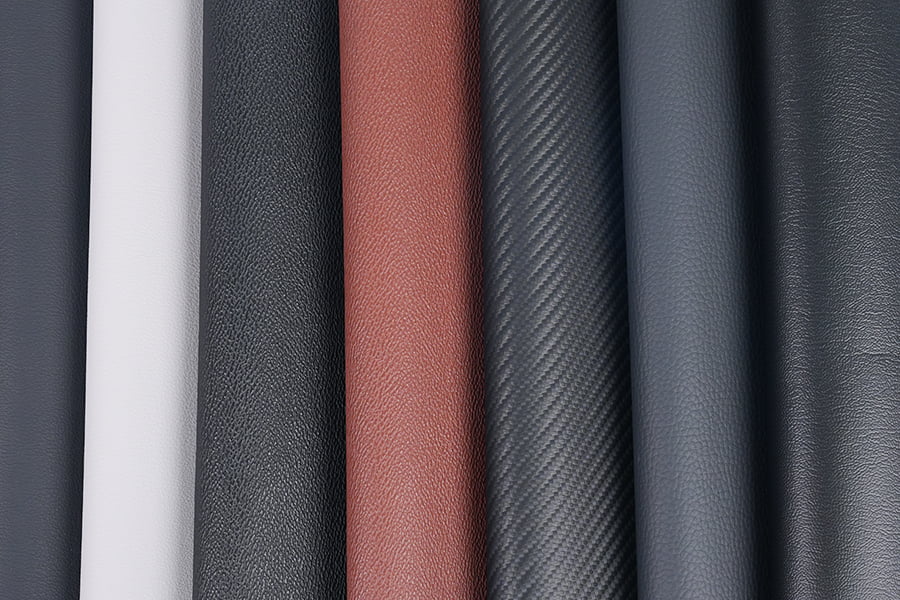 Wholesale High Wear-Resistant PVC Car Interior Leather Suppliers, Factory - DongDongtai Fuan Synthetic Materials Co., Ltd is China wholesale High Wear-Resistant PVC Car Interior Leather suppliers and factory,High wear...View Product →
Few purchasing decisions compare materials in isolation. Most buyers weigh PVC synthetic leather against PU (polyurethane) synthetic leather and genuine leather. The right answer depends on the application, the budget, and the quality target.
| Feature | PVC Synthetic Leather | PU Synthetic Leather | Genuine Leather |
|---|---|---|---|
| Relative cost | Lowest | Moderate | Highest |
| Abrasion resistance | Good to excellent | Moderate | Good, finish-dependent |
| Softness and drape | Good when correctly formulated | Generally softer and more supple | Natural, develops patina |
| Breathability | Low | Moderate | High |
| Water and stain resistance | Excellent | Good | Poor without treatment |
| Maintenance | Easy wipe-down | Easy wipe-down | Requires conditioning |
| Typical aging issue | Surface cracking after long use | Surface scratch marks | Drying and cracking without care |
On price, PVC sits lowest. On breathability and softness, PU generally leads. Genuine leather offers natural character and aging behavior that synthetics cannot fully replicate, but it demands maintenance and costs far more. A practical rule: choose PVC for wear resistance, easy cleaning, and budget control; choose PU for softness and breathability; choose genuine leather when the product's identity depends on natural material. For a deeper look at the two synthetic options, read our detailed breakdown: PVC vs PU artificial leather.
PVC synthetic leather is not a single formula; it is a family of grades, and each industry uses its own specification.
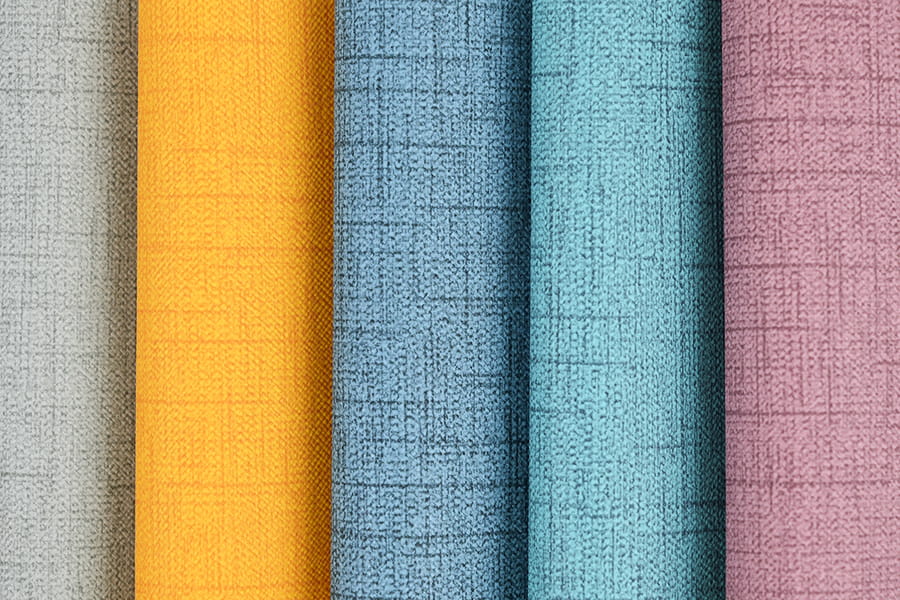 Wholesale Anti-Peeling Durable Synthetic Leather For Sofa Suppliers, Factory - DDongtai Fuan Synthetic Materials Co., Ltd is China wholesale Anti-Peeling Durable Synthetic Leather For Sofa suppliers and factory,Anti-P...View Product → are engineered to prevent the surface delamination that ruins inexpensive furniture.
The environmental story is more balanced than the common criticism suggests. The criticism is real: traditional PVC chemistry involves chlorine, early plasticizers raised health questions, and cheap grades can release odor and harden quickly. At the end of its life, a PVC roll in a landfill is not a positive image.
Modern manufacturing responds to those problems. Producers now use odorless plasticizer systems, stabilizers that reduce processing emissions, and surface treatments that lower volatile compound release in enclosed spaces. Recycled polyester base fabrics reduce the footprint further. Our own ecological direction, for example, includes eco-friendly synthetic leather and environmentally friendly decoration leather, both recognized as Jiangsu Province high-tech products. One concrete illustration is our eco-friendly and odorless interior decoration leather, designed for spaces where smell and air quality matter most. For a broader view of the industry trend, see innovative materials driving sustainability in synthetic leather.
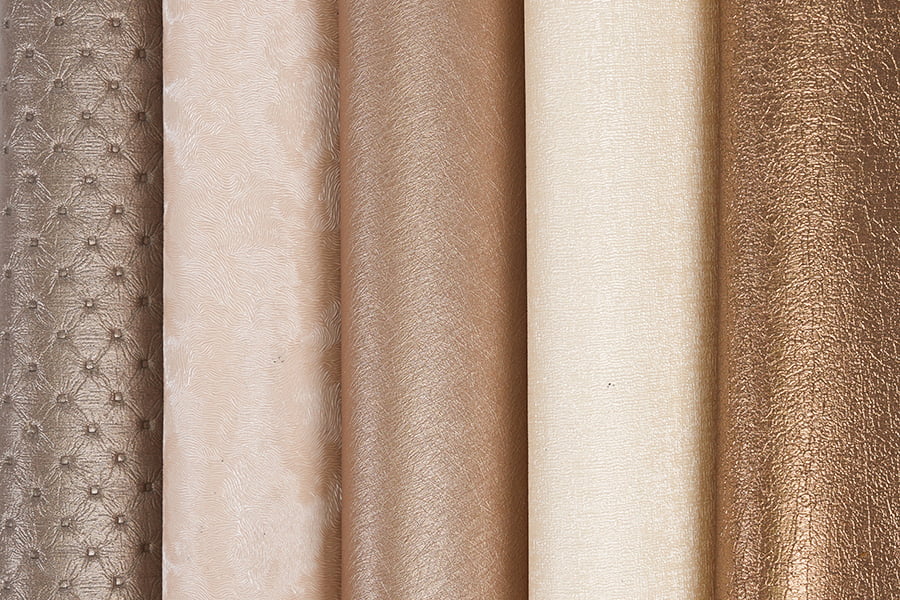 Wholesale Environmentally Friendly Odorless Interior Decoration Leather SupplierDongtai Fuan Synthetic Materials Co., Ltd is China wholesale Environmentally Friendly Odorless Interior Decoration Leather suppliers and ...View Product →
The honest conclusion is that modern low-emission PVC synthetic leather is not the same product that created the old reputation. Buyers who still assume otherwise are comparing today's materials with a memory from decades ago.
Price lists look similar; real-world performance does not. Our customers use this checklist before committing to a supplier.
Supplier capability is part of the equation. A producer with an in-house R&D team and real production scale — our facility employs 46 R&D specialists and turns out more than 20 million square meters of synthetic leather per year — can control formulation and process variables in a way a trading company cannot.
PVC synthetic leather is an engineered material, not a poor imitation. It balances wear resistance, easy cleaning, design flexibility, and cost in a combination that genuine leather and PU leather cannot match at the same price point. Modern low-emission formulations have also narrowed the environmental gap, making it a defensible choice for many commercial products.
If your project involves automotive interiors, sofas, luggage, footwear, fitness equipment, or interior decoration, start with a clear specification of the performance you need, then evaluate how each material candidate meets it. Our product pages cover the main application series, and our team is ready to answer inquiries about your specific requirements.
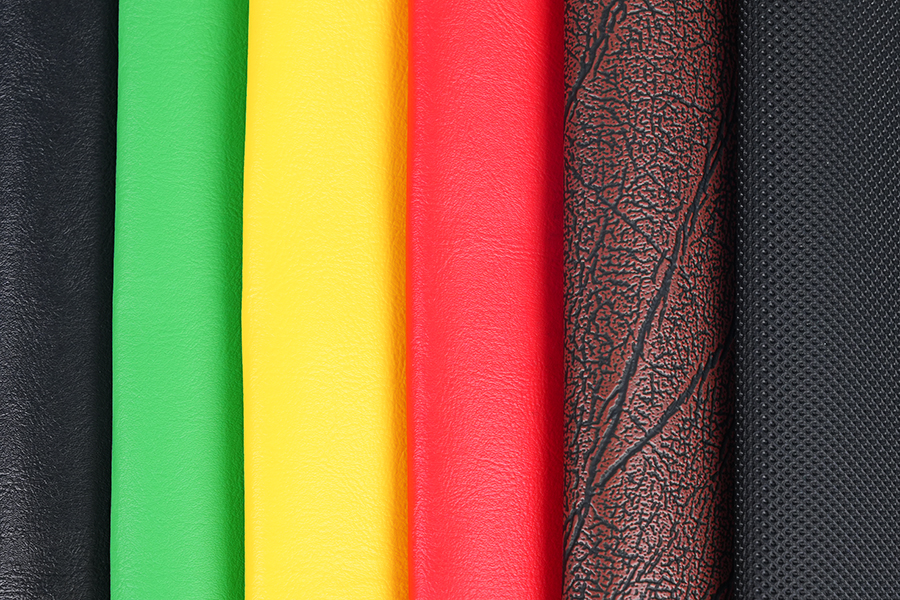
The Versatility of Sofa Artificial Leather in Different Home Decor Styles Sofa artificial leather has gained significant popularity as a material for home furniture, owing to its impressive versatilit...
View MoreIntroduction to Synthetic Leather What is Synthetic Leather? Definition and overview: Synthetic leather, also known as faux leather, vegan leather, or artificial leather, is a man-made material desig...
View MorePVC (Polyvinyl Chloride) and PU (Polyurethane) are two popular materials used in the production of automotive synthetic leather, each with its unique characteristics. Below are the key differences: Ma...
View MoreIntroduction of Synthetic Leather for Shoes What Is Synthetic Leather? Synthetic leather refers to any man-made material designed to imitate the appearance, texture, and qualities of genuine leather. ...
View MoreCopyright © Fu'an Synthetic Materials Co.,Ltd. Rights Reserved.
 Privacy
Custom PVC Synthetic/Artificial Leather Manufacturers
Privacy
Custom PVC Synthetic/Artificial Leather Manufacturers