language

Search

 中文简体
中文简体 English
 Español
 عربى
عربى Indonesia
Inquiry Now 
A furniture maker in Vietnam contacted us last month with a question we hear almost every week: "How long does PVC leather last?" Their customer was choosing between two sofa options for a family room used daily by two adults, three children, and one golden retriever. The sofa would sit near a large south-facing window, and the buyer wanted a material that would still look presentable after six years of heavy use.
As a synthetic leather manufacturer with more than fifteen years of production experience, we know that a single number would be misleading. PVC leather lifespan depends on material grade, base fabric construction, coating formulation, the specific application, and the conditions of daily use. That is why we wrote this guide. It gives buyers, product designers, and furniture makers a realistic, practical understanding of how long PVC leather lasts, what causes it to fail, and how to extend its service life.
High-quality PVC leather, made with a dense base fabric, a well-balanced plastisol formulation, and a protective top coat, can last 8 to 15 years in normal indoor use. Mid-range PVC leather typically serves 4 to 7 years. Economy-grade PVC leather may begin to show visible cracking or peeling within 2 to 3 years, especially in high-use furniture or automotive interiors.
If you are designing a product around PVC leather, the safest expectation is 5 to 10 years for a well-constructed item used under moderate conditions. In commercial or high-friction environments such as restaurant seating, waiting areas, or fitness studios, the same material may last only 2 to 5 years because of higher usage frequency and more aggressive cleaning cycles.
Three numbers are worth remembering:
These ranges come from our own factory testing, customer feedback across more than 100 product lines, and accelerated aging trials we conduct on every new formulation we develop.
PVC leather lifespan is not a property of the material alone. It is the result of six interacting factors. Understanding each one helps you predict how long a specific product will last and avoid premature failure.
The base fabric is the foundation. Woven polyester with high yarn density resists tearing and delamination. Low-density knitted fabric allows the PVC coating to pull away under repeated stress, causing early peeling.
Plasticizers keep the PVC compound flexible. Premium plasticizers resist migration and evaporation. Low-cost plasticizers leave the material stiff and brittle within a few years, and that stiffness leads directly to surface cracks.
Thicker PVC coatings provide more wear material. Economy products use 0.3 to 0.5 millimetres of coating; premium automotive grades often reach 1.0 to 1.5 millimetres. The extra thickness adds years of service in high-friction applications.
A clear top coat defends against abrasion, stains, and ultraviolet radiation. PVC leather without a top coat oxidizes and fades noticeably faster. The top coat is the first line of defence in everyday use.
Direct sunlight, room temperatures above 35 degrees Celsius, humidity over 70 percent, repeated bending, sharp objects, and abrasive contact all accelerate aging. The same material can last twice as long in a climate-controlled office as in a sunlit living room.
Regular gentle cleaning and occasional conditioning extend usable life. Solvents, alkaline detergents, abrasive pads, and prolonged exposure to moisture shorten it dramatically. Maintenance is the factor most often underestimated by end users.
Not all PVC leather is the same. The table below summarizes typical lifespans for three grades of material we see in the market. These are realistic estimates based on our production data and customer-reported performance.
| Quality Tier | Typical Lifespan | Construction Characteristics | Common Applications |
|---|---|---|---|
| Economy | 2–4 years | Thin 0.3–0.5 mm PVC coating, low-density knitted or non-woven base, minimal top coat | Budget furniture, promotional bags, low-cost footwear, temporary exhibition panels |
| Mid-Range | 4–7 years | Balanced 0.6–0.9 mm coating, woven polyester base, protective top coat applied | Residential sofas, standard automotive trim, decorative wall panels, luggage |
| Premium | 8–15 years | Thick 1.0–1.5 mm coating, dense woven or non-woven base, UV and abrasion-resistant top coat | High-end furniture, automotive OEM interiors, aviation and railway seating, luxury bags |
The difference between the lowest and highest tier is not just a marketing story. Our factory tests show that premium PVC leather with a dense 1200-denier woven base and a top coat formulated with UV absorbers can withstand more than 100,000 Martindale abrasion cycles, while economy material often fails at under 20,000 cycles.
PVC leather ages through several physical and chemical processes. Understanding these mechanisms helps you recognize why a particular material fails and what to look for when sourcing a longer-lasting alternative.
The most common cause of PVC leather failure is plasticizer loss. Plasticizers are liquid additives that keep PVC molecules from becoming rigid. Over time they migrate to the surface, evaporate into the air, or are removed by cleaning solvents. As the plasticizer content drops, the PVC layer hardens and then cracks under normal flexing. The first visible sign is often a tacky or greasy surface, followed by stiffness and fine cracks along fold lines.
Ester-based plasticizers can react with moisture in the air, breaking down into shorter molecules. This process is accelerated by warmth and humidity. It creates a characteristic dry cracking pattern across the surface. Premium PVC formulations use plasticizers with higher resistance to hydrolysis, which is one reason they last significantly longer in tropical climates.
Ultraviolet radiation from sunlight breaks molecular bonds in PVC and in the colour pigments. The surface becomes dull, chalky, and discoloured. Dark colours fade faster than light ones because they absorb more UV energy. A UV-stabilized top coat can slow this process considerably, which is why automotive-grade PVC leather is formulated differently from indoor-grade material.
Repeated rubbing erodes the top coat and exposes the softer PVC layer underneath. Continuous flexing at seams, armrests, and corners creates stress points where cracks start. Once cracks reach the interface between the PVC coating and the base fabric, delamination follows. At that stage, the material begins to peel in sheets and is beyond repair.
The application determines how quickly PVC leather wears. A sofa in a quiet reading room sees far less stress than a fitness bench used for several hours each day. Here are realistic lifespan expectations for the most common product categories.
Residential sofas upholstered in premium PVC leather can last 6 to 10 years with normal household use. Family rooms with children, pets, or daily television viewing may see 4 to 6 years. Commercial seating such as restaurant booths and office waiting areas places much greater strain on the material, with typical lifespans of 3 to 5 years before the top coat begins to wear thin on armrests and seat edges.
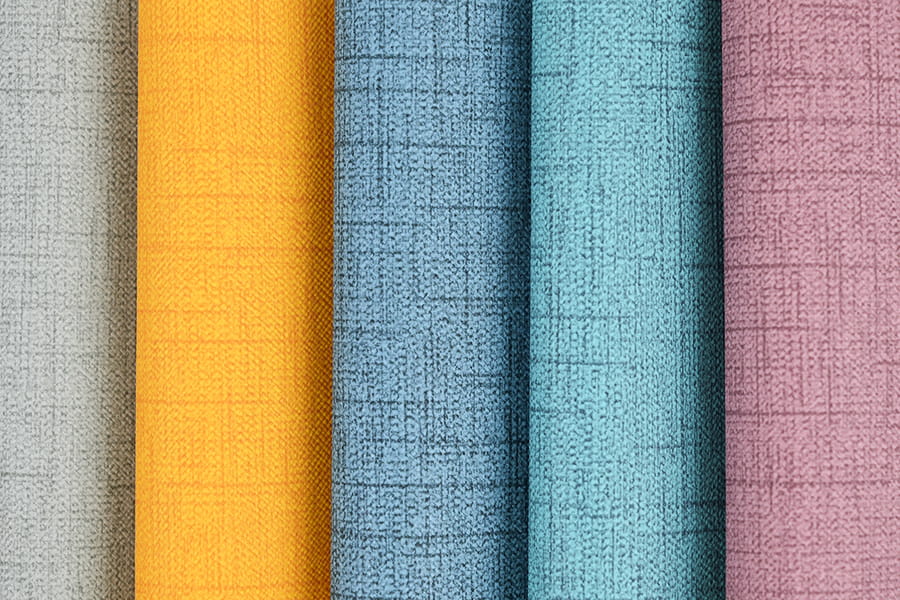 Anti-Peeling PVC/PU Synthetic Leather for Sofa UpholsteryEngineered with a special surface treatment to resist cracking and peeling, this PVC/PU leather suits residential sofas, offering customizable colors, stain resistance, and easy maintenance for long-lasting comfort.View Product →
Vehicle interiors expose PVC leather to intense sunlight, temperature swings from below freezing to over 60 degrees Celsius, and constant friction from passengers. A high-quality automotive PVC leather formulated with UV stabilizers and low-fog plasticizers can last 8 to 12 years. Lower grades may start to crack on seat bolsters and door panels within 3 to 4 years. We recommend that automotive buyers specifically request materials tested to OEM abrasion and heat-aging standards.
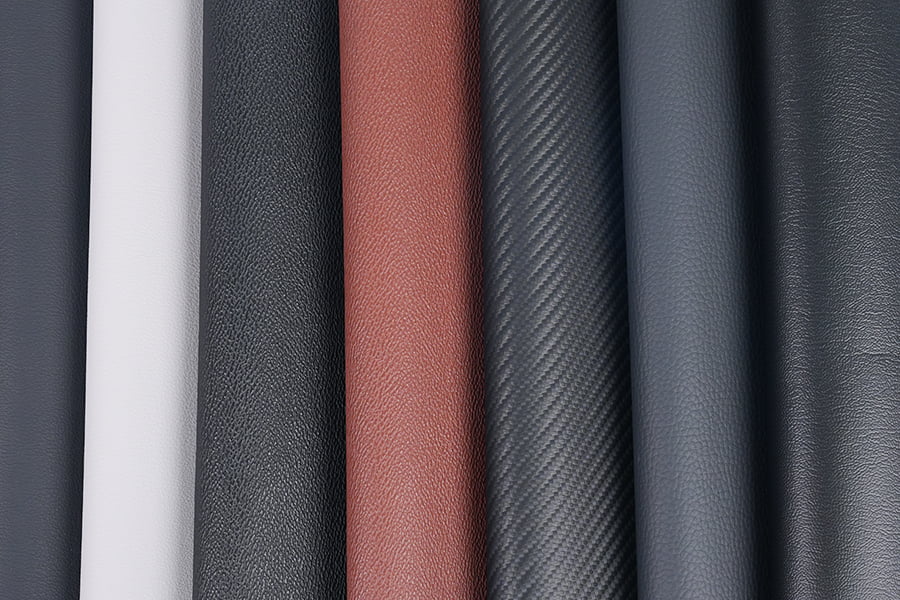 High Wear-Resistant PVC/PU Leather for Automotive InteriorsThis automotive-grade leather, available in PVC or PU, provides abrasion resistance for seats and door panels. With thicknesses of 0.6–1.2 mm and varied textures, it meets durability needs in demanding vehicle conditions.View Product →
PVC leather used in handbags, travel cases, and laptop bags faces bending stress at handles and fold lines plus scratching from daily handling. A well-constructed bag made with quality PVC leather should last 4 to 7 years. Lightweight PVC leathers designed for luggage with a scratch-resistant top coat tend to perform best in this role. The main failure mode is edge cracking at stress points rather than overall surface wear.
Fitness equipment surfaces receive heavy perspiration, abrasive contact with workout clothing, continuous friction, and frequent cleaning with disinfectants. Specialty sweat-resistant and fire-retardant PVC leather survives 4 to 8 years on home equipment and 2 to 4 years in commercial gyms. Choosing a formulation with hydrolysis resistance is critical for this application, because sweat and humidity attack the plasticizer system over time.
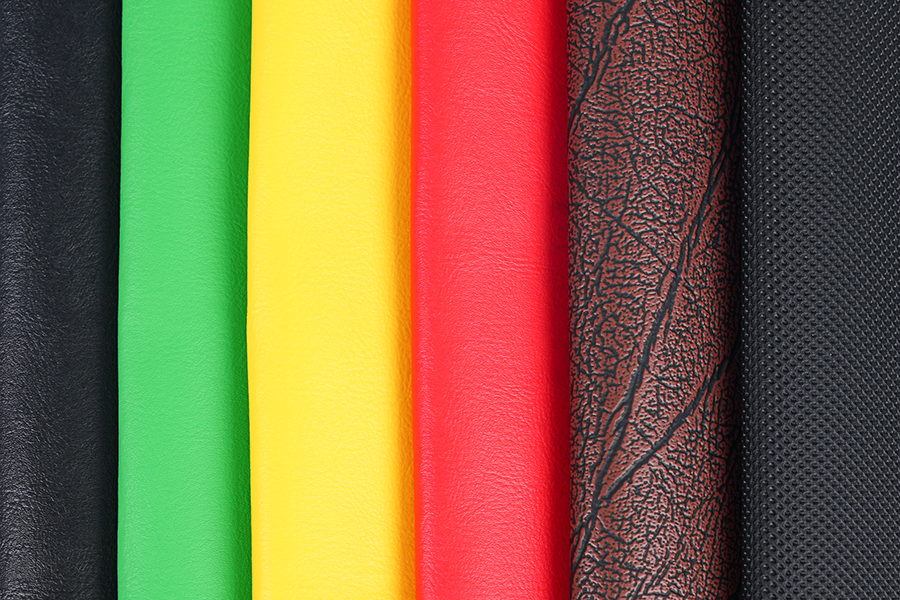 Sweat-Proof Wear-Resistant Synthetic Leather for Fitness EquipmentDesigned for gym surfaces, this synthetic leather resists sweat, abrasion, and blistering. Available in multiple thicknesses and base fabrics, it enhances durability and comfort on treadmills, seats, and handles.View Product →
Shoes impose extreme flexing on materials. PVC leather used in footwear typically lasts 1 to 3 years of regular wear before crease cracking appears at the vamp and toe areas. This is why PVC leather is more common in fashion boots, work shoes, and affordable casual footwear than in premium dress shoes. A high-stretch formulation with good flex resistance can improve this significantly.
Wall panels and decorative surfaces experience minimal mechanical stress and limited direct UV exposure, so PVC leather in this role can last 10 years or more. The primary risk is humidity. In bathrooms or kitchens with high moisture levels, a moisture-resistant formulation is essential to prevent hydrolysis and mildew growth on the base fabric.
The chart below visualizes the typical lifespan ranges for different PVC leather grades and applications. The bar lengths are proportional to the expected service life in years.
These ranges assume the furniture or product is used indoors and receives basic cleaning. Outdoor use or exposure to direct sunlight through windows will shift every range downward.
Recognizing the early warning signs of PVC leather aging can save you from sudden failures. If you catch the problem early, you can sometimes delay replacement by a year or more. The table below lists the most common warning signs and what they mean.
| Warning Sign | What It Indicates | Recommended Action |
|---|---|---|
| Tacky or sticky surface | Plasticizer migration is advanced; the PVC compound is losing flexibility | Clean gently with mild soap; expect hardening and cracking to follow within 1–2 years |
| Hairline cracks at seams and folds | The PVC layer is becoming brittle from plasticizer loss or UV exposure | Reduce flexing of the area; apply a PVC-safe conditioner; monitor the spread |
| Peeling or flaking of the coating | Delamination between the PVC coating and base fabric has begun | Repair is rarely durable; plan for replacement of the affected panel or product |
| Fading or dull surface colour | UV radiation is breaking down pigments and the PVC surface | Limit direct sunlight exposure; use a protectant with UV absorbers |
| Shiny, worn patches on contact areas | The top coat is thinning from abrasive friction | Use a conditioner to lubricate the surface; avoid abrasive cleaners |
| Persistent chemical odour | Plasticizers are degrading and releasing short-chain compounds | Ventilate the space; if the odour remains after cleaning, replacement is advisable |
With consistent and correct care, you can add 2 to 5 years to the service life of most PVC leather products. The following practices are based on our company's testing and on feedback from customers who have used our materials for over a decade.
Following this routine will not make economy-grade material perform like premium grade, but it will help every grade reach its realistic maximum lifespan.
Buyers frequently ask us to compare PVC leather and PU leather. The two materials have different strengths, and the answer depends on the application. PVC leather generally offers better water resistance, dimensional stability, and abrasion resistance, which is why it dominates furniture, automotive trim, and luggage applications. PU leather has a softer hand feel and better breathability, but it often degrades faster in high-friction and high-humidity environments.
In our production experience, high-quality PVC leather usually outlasts mid-range PU leather in furniture and automotive applications by 2 to 4 years, provided both receive similar care. PU leather tends to develop surface cracking on seat cushions and armrests sooner because its polyurethane top layer is thinner and more sensitive to hydrolysis. For a detailed technical breakdown of the two materials, read our guide on the differences between PVC artificial leather and PU artificial leather.
Selecting the correct grade of PVC leather is about matching the material to the real conditions of use. The table below gives practical selection criteria for common product categories. These are the specifications we apply when a customer asks us to develop a material for a specific application.
| Application | Minimum Base Fabric Density | Minimum Coating Thickness | Key Performance Requirement |
|---|---|---|---|
| Residential sofa | 400 g/m² woven polyester | 0.8 mm | Anti-peeling behaviour, stain-resistant top coat |
| Automotive interior | 500 g/m² dense woven polyester | 1.0 mm | UV stability, Martindale abrasion above 50,000 cycles |
| Fitness equipment | 450 g/m² woven polyester | 0.8 mm | Sweat resistance, flame retardancy, hydrolysis resistance |
| Bags and luggage | 350 g/m² woven or knitted | 0.6 mm | Scratch resistance, lightweight, good flex endurance |
| Shoe uppers | 300 g/m² knitted base | 0.5 mm | High flexibility, crease resistance, waterproof surface |
| Interior wall panels | 400 g/m² woven | 0.7 mm | Odour-free formulation, moisture resistance |
These figures are starting points. Our engineering team customizes the formulation for each customer's specific test requirements, whether that is a particular flame-retardancy standard, a specific colour fastness level, or a demanding flex endurance target.
PVC leather has improved significantly in environmental performance over the past decade. Modern production methods use phthalate-free plasticizers, bio-based resin blends, and closed-loop water systems. Some of our product lines incorporate recyclable and bio-based materials, including PBS-based synthetic leather that offers a lower carbon footprint without sacrificing durability.
For manufacturers and brands concerned about sustainability, the long service life of PVC leather is itself an environmental advantage. A sofa that lasts 10 years instead of 3 years requires fewer replacements and generates less waste. When you combine good durability with responsible production practices, PVC leather becomes a defensible material choice for eco-conscious product lines.
High-quality PVC leather on a residential sofa typically lasts 5 to 10 years with normal use and proper care. Commercial sofas in offices, restaurants, or waiting areas generally see shorter lifespans of 3 to 5 years because of heavier daily use and more frequent cleaning.
Yes, PVC leather can crack when plasticizers migrate out of the compound, making the material stiff and brittle. High-quality PVC with premium plasticizers and a protective top coat resists cracking much longer. Maintenance and avoiding direct sunlight also play important roles.
PVC leather is highly water-resistant because of its dense plastic coating, but it is not fully waterproof. Liquids can seep through seams, edges, and stitching if left in contact for extended periods. Spills should be wiped off promptly with a dry cloth.
Use a soft damp cloth with warm water and a few drops of mild liquid soap. Wipe the surface gently, then dry with another soft cloth. Never use alcohol, acetone, ammonia-based glass cleaners, or abrasive powders.
Small surface scratches can sometimes be disguised with a leather repair kit or pigment paste. Once the coating has delaminated from the base fabric and is peeling in sheets, lasting repair is very difficult. For furniture and automotive applications, replacing the affected panel is usually more cost-effective than repairing it.
Look for automotive-grade PVC leather with UV stabilizers, low volatile organic compound emissions, high abrasion resistance, and good low-temperature flexibility. The base fabric should be a dense woven polyester with a minimum weight of 500 g/m². Materials that meet OEM fogging and heat-aging standards are the most reliable choice.
The simplest test is the water drop test: place a drop of water on the surface. Genuine leather absorbs moisture slowly, while PVC leather repels it and leaves a bead. Another indicator is the back side, where PVC leather typically reveals its woven or knitted fabric backing.
Every batch of PVC leather produced at our facility in Dongtai undergoes standardized durability testing before it is shipped. These tests give us data-driven answers when customers ask how long their material will last. The three most informative tests are the Martindale abrasion test, the flex endurance test, and the heat-aging test.
In the Martindale abrasion test, a circular sample of PVC leather is rubbed against a standard wool fabric under controlled pressure. Economy grades often fail below 20,000 cycles. Mid-range materials reach 30,000 to 50,000 cycles. Premium automotive and furniture grades exceed 100,000 cycles without breaking through the top coat.
The flex endurance test bends a strip of PVC leather back and forth at a fixed angle. Our high-flex shoe-upper grades withstand more than 200,000 flexes without visible cracking, while standard grades typically fail at 50,000 to 100,000 flexes. The difference comes from the plasticizer system and the softness of the base fabric.
The heat-aging test places samples in an oven at 100 degrees Celsius for 7 days, which simulates several years of natural aging. After the test, we measure the loss of tensile strength and elongation. Premium grades retain more than 80 percent of their original elongation, which correlates with long, crack-free service life in real products.
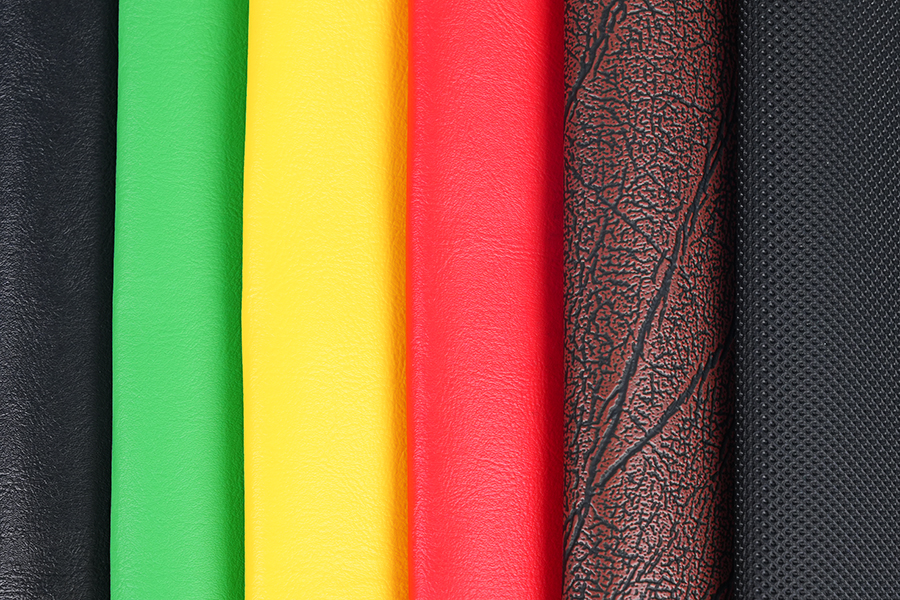
The Versatility of Sofa Artificial Leather in Different Home Decor Styles Sofa artificial leather has gained significant popularity as a material for home furniture, owing to its impressive versatilit...
View MoreIntroduction to Synthetic Leather What is Synthetic Leather? Definition and overview: Synthetic leather, also known as faux leather, vegan leather, or artificial leather, is a man-made material desig...
View MorePVC (Polyvinyl Chloride) and PU (Polyurethane) are two popular materials used in the production of automotive synthetic leather, each with its unique characteristics. Below are the key differences: Ma...
View MoreIntroduction of Synthetic Leather for Shoes What Is Synthetic Leather? Synthetic leather refers to any man-made material designed to imitate the appearance, texture, and qualities of genuine leather. ...
View MoreCopyright © Fu'an Synthetic Materials Co.,Ltd. Rights Reserved.
 Privacy
Custom PVC Synthetic/Artificial Leather Manufacturers
Privacy
Custom PVC Synthetic/Artificial Leather Manufacturers