language

Search

 中文简体
中文简体 English
 Español
 عربى
عربى Indonesia
Inquiry Now 
A furniture importer in Hamburg opened a container of 600 PVC-upholstered dining chairs in early March and everything looked perfect on the pallet. Eight weeks later, the after-sales inbox told a different story: a tacky film that collected dust on every seat, pale grey transfer marks on painted walls wherever a chair back touched them, and a smell that was still noticeable in an unventilated showroom. None of those problems appeared anywhere on the supplier's datasheet. All of them were predictable downsides of PVC leather, and all of them could have been designed out at the quotation stage.
So here is the direct answer before the detail. The genuine downsides of PVC leather are not that it "looks cheap." They are: plasticizer migration that makes surfaces tacky and then brittle; odor and VOC emissions that are impossible to argue with once a customer has smelled them; poor flexibility below roughly minus 10 degrees Celsius unless the compound is specifically built for cold; yellowing and hardening under sustained heat and UV; higher weight and lower breathability than polyurethane; regulatory exposure to phthalate restrictions in the EU, the United States and an increasing number of other markets; and a genuinely difficult end-of-life story, because PVC leather is a bonded multi-material laminate rather than a single polymer.
What makes that list tricky is that none of those failures are inherent properties of "PVC" in the abstract. They are properties of one particular compound, one particular backing, one particular topcoat and one particular process window. Two rolls sold under the same product name can differ by a factor of two in plasticizer loading, and that single number decides whether a sofa still looks new after four years or looks tired after fourteen months. The sections below walk through each downside, the numbers that define it, the tests that expose it, and the specification choices that keep it from becoming your problem.
Not every downside deserves equal attention. A slight stiffness in a luggage panel is a design preference; a plasticizer that migrates into a customer's painted wall is a warranty claim. Ranking the problems by their commercial consequences is the fastest way to decide where your quality budget should go.
| Downside | Typical trigger | First visible symptom | Where the cost lands |
|---|---|---|---|
| Plasticizer migration | Heat, pressure, long contact with lacquers or polystyrene | Tacky surface, ghost marks, later cracking | Warranty claims and retail returns |
| Odor and VOC release | Fresh production, tight packing, high plasticizer load | Smell complaints, haze on glass | Delayed release, rejected shipments |
| Cold cracking | Transit or storage below minus 10 degrees Celsius | Splits along folds and piping | Cold-chain and outdoor failures |
| Heat and UV aging | Sunlight, dashboards, 60 degrees Celsius surfaces | Yellowing, hardening, chalking | Premature replacement |
| Weight and drape | High filler content, dense backing | Heavy rolls, stiff upholstery, plastic hand feel | Freight cost and sewing difficulty |
| Regulatory exposure | Phthalate content above restricted limits | Failed laboratory test, customs hold | Rework, disposal, market withdrawal |
| Recycling difficulty | Bonded foam and knit backing | No viable take-back route | Extended producer responsibility fees |
Read that ranking as a budget guide rather than a verdict. Two of the seven problems below are chemistry problems that a buyer can control entirely through the purchase specification. Three are process and storage problems that can be managed with packaging, ageing time and handling rules. Only two — the regulatory and end-of-life issues — are structural features of the material family itself, and even those can be softened with plasticizer choice and backing design.
Flexible PVC is a two-part system: long rigid polymer chains, and a liquid plasticizer that slips between them so the chains can slide instead of snapping. Depending on the application, a leather compound may carry anywhere from 30 to 60 parts of plasticizer per hundred parts of resin. That liquid is not chemically bonded to the polymer. It is dissolved in it, which means anything that reduces its solubility — heat, pressure, time, or contact with a second polymer that likes the plasticizer more than PVC does — will slowly pull it out.
This is why a chair that was perfectly dry in the factory can become sticky after a summer in a warehouse, and why the same roll can leave a greasy shadow on a lacquered shelf it never touched during production.
Buyers rarely request these tests because they are not on the standard factory data sheet, but they are inexpensive and fast.
A practical rule from our own production floor: if the plasticizer is a low-molecular-weight phthalate chosen purely for cost, migration is a matter of when, not if. Moving to a higher-molecular-weight plasticizer or a non-phthalate alternative typically adds 10 to 40 percent to the compound cost and reduces migration by an order of magnitude.
Odor is the most subjective complaint a customer can make and the hardest to defend against, because the customer is always right about what they can smell. The good news is that odor is measurable, and automotive programmes have been measuring it for two decades.
Four sources contribute to the smell of new PVC leather: residual plasticizer volatiles, solvent residues from topcoat and print operations, the stabiliser and lubricant package in the compound, and the adhesive used to bond the backing. Freshly produced material always reads higher, and most compounds settle significantly within two to four weeks of open ageing. The problem is what happens in between — if the roll is wrapped tightly and loaded into a container for six weeks, those volatiles have nowhere to go except into the film, and they release in a concentrated burst the moment the box is opened at the destination.
Passenger car interior air quality is regulated in China by GB/T 27630, which caps eight substances in the cabin. These limits shape what a credible automotive leather compound can contain.
| Substance | Limit (mg per cubic metre) | Main material source |
|---|---|---|
| Benzene | 0.11 | Solvent residues |
| Toluene | 1.10 | Printing and coating solvents |
| Xylene | 1.50 | Printing and coating solvents |
| Ethylbenzene | 1.50 | Solvent residues |
| Styrene | 0.26 | Backing and adhesive |
| Formaldehyde | 0.10 | Resins and finishing agents |
| Acetaldehyde | 0.05 | Thermal degradation products |
For furniture and luggage, the relevant test is usually simpler: a closed-jar or closed-chamber panel test at 60 degrees Celsius for a few hours, scored by a trained assessor. Ask for a score on a one-to-five scale and set your own acceptance threshold before you place the order, not after the first container is rejected.
Fogging is the condensation of volatile material onto a cooler surface, and it shows up as a hazy film on car windscreens, on glass display cabinet doors and on the inside of luggage. The standard gravimetric method condenses volatiles onto a cooled glass plate at 100 degrees Celsius for 16 hours and weighs the deposit. Furniture grades are frequently accepted below about 1.0 milligram; automotive specifications are usually tighter. Plasticizer molecular weight is the single biggest lever — the lighter the plasticizer, the heavier the fogging deposit.
Flexibility in PVC comes entirely from plasticizer, and the efficiency of that plasticizer changes with temperature. A standard furniture compound feels pleasantly supple at 20 degrees Celsius and becomes noticeably stiff around zero. Below roughly minus 10 degrees Celsius it starts to resist folding, and at minus 25 to minus 30 degrees Celsius it can split along a crease the way a sheet of card would. Unheated warehouses, winter road transport through northern Europe or Canada, and outdoor furniture covers are the classic failure sites.
The gap between the first and third columns is not a manufacturing miracle. It is a different plasticizer system, a lower filler content and a slightly higher compound cost. Cold-flex grades use plasticizers with better low-temperature efficiency, and they hold up in a cold bend test at minus 20 degrees Celsius where an ordinary compound fails immediately.
| Material | Cold bend at minus 20 C | Cold bend at minus 30 C | Useful continuous heat ceiling |
|---|---|---|---|
| Standard PVC leather | Fails or shows stress whitening | Fails | Around 60 C |
| Cold-flex PVC leather | Passes | Borderline | Around 65 C |
| Polyurethane leather | Passes | Usually passes | Around 70 C, with hydrolysis risk |
At the other end of the curve, a dark dashboard in direct sun can reach 70 degrees Celsius or more. Add ultraviolet radiation and oxygen, and three things happen at once: the stabiliser package is consumed, plasticizer volatilises from the surface layer, and the topcoat begins to chalk. The visible result is a colour shift toward yellow or grey, followed by surface hardening and fine cracking.
Accelerated testing handles this well. A 400-hour QUV exposure with a grey scale rating of 4 or better and a total colour shift below three Delta E units is a reasonable furniture specification. Compounds built with calcium-zinc stabilisers and an epoxy soybean oil co-stabiliser perform far better here than the older barium-zinc systems, and the difference is visible within one summer season on a south-facing display.
Two rolls can look identical and feel completely different on the cutting table. Density explains most of it. A PVC leather compound typically sits between 1.25 and 1.45 grams per cubic centimetre, while polyurethane comes in closer to 1.10 to 1.25. On a one millimetre sheet that difference converts directly into kilograms per square metre, and kilograms per square metre convert into freight.
| Material | Density range | Mass at 1.0 mm | Practical consequence |
|---|---|---|---|
| PVC leather compound | 1.25 to 1.45 g per cubic centimetre | 1.25 to 1.45 kg | Heavier rolls, higher freight, firmer drape |
| PU leather compound | 1.10 to 1.25 g per cubic centimetre | 1.10 to 1.25 kg | Lighter handling, softer fold |
| Filled economy PVC | Above 1.45 g per cubic centimetre | Above 1.45 kg | Cheap per metre, expensive per container |
There is a second, subtler cost buried in that table. A heavily filled economy compound is cheaper per linear metre, but it also weighs more, folds less crisply, sews harder and tends to show crease whitening sooner. Upholsterers notice this within an hour of the first cut, and they rarely complain formally — they simply refuse the next order.
An unmodified PVC film is essentially non-porous, so moisture vapour has nowhere to go. On a car seat in a humid climate, on a gym bench, or inside a shoe, that translates into a cold, clammy contact feeling that no technical brochure can talk away. There are partial fixes: micro-perforation, coagulation coatings, moisture-wicking backings and open-cell foam layers all improve the experience, but none of them turns PVC into a genuinely breathable material. Where breathability is the primary requirement, polyurethane or a textile-faced laminate is the more honest choice.
Sound is a related, underestimated issue. PVC surfaces rubbing against each other can produce a distinct squeak, which is exactly the kind of detail that generates a one-star review even when the material performs perfectly in every laboratory test.
This is the downside with the longest tail, because it changes without warning and it can strand inventory that was perfectly legal when it was produced.
In the European Union, REACH Annex XVII entry 51 restricts four phthalates — DEHP, DBP, BBP and DIBP — to no more than 0.1 percent by weight, individually or in combination, in the plasticised material of articles. Several phthalates also appear on the candidate list of substances of very high concern, which triggers communication obligations along the supply chain and, for articles, notification and database duties when the concentration exceeds 0.1 percent by weight. In the United States, the Consumer Product Safety Improvement Act caps DEHP, DBP and BBP at 0.1 percent in children's toys and child care articles, and California's Proposition 65 adds a labelling obligation for several phthalates. European authorities have also conducted a dedicated investigation into PVC and its additives, which has kept plasticizers in this material under active review.
The industry response has been a shift toward non-phthalate plasticizers such as di-isononyl cyclohexane dicarboxylate, dioctyl terephthalate and acetyl tributyl citrate. These work, but they are not drop-in replacements in every formula. Expect a cost premium, differences in gelation behaviour, and in some cases different fogging or extraction performance that must be re-validated rather than assumed.
A statement of phthalate content by GC-MS for each individual restricted substance, not a single "phthalate-free" claim, plus a current SVHC declaration against the latest candidate list.
Plasticizer is often introduced through a purchased compound or a recycled stream. Without a test report, neither your supplier nor their supplier can prove what is actually in the roll.
Printing inks, topcoat solvents and backing adhesives can carry restricted substances too, so the compliance scope must cover the finished laminate, not just the PVC skin.
A finished piece of PVC leather is not one material. It is a stack: a topcoat, a printed pattern layer, a PVC skin carrying plasticizer and stabiliser, an adhesive, and a knit, woven or non-woven backing, sometimes with a foam laminated behind it. Mechanical recycling needs clean, single-polymer streams, and this structure does not provide one. Separating the layers is technically possible and commercially rare.
Chlorine is the second half of the problem. PVC resin is roughly 57 percent chlorine by weight, and when it burns in poorly controlled conditions it produces hydrogen chloride and, in certain temperature windows, dioxins and furans. Modern waste-to-energy plants manage this with scrubbers and controlled combustion, but the perception alone is enough to make some brands avoid the material, and several extended producer responsibility schemes now weight fees according to recyclability as well as mass.
There is a fair counter-argument that deserves airtime. A PVC sofa that survives twelve years may carry a lower total footprint than a "greener" alternative replaced every three years, especially when the replacement is shipped across an ocean each time. Durability is a sustainability strategy. The honest position is that PVC leather's end-of-life weakness is real, and the most effective response today is to design for longer service life, specify non-phthalate plasticizers, and keep the backing separable where the application allows it.
Here the picture is genuinely mixed, and it is worth stating that plainly. Because of its chlorine content, flexible PVC is inherently flame retardant. Its limiting oxygen index sits in the low twenties, well above polyethylene or polypropylene, which means it can often meet flammability requirements with less additive loading than a polyolefin equivalent. That is a real advantage.
The downside is smoke. Burning PVC releases hydrogen chloride, which is corrosive, acidic and toxic, and which can damage electronics and metal fixings in a compartment far from the fire itself. Smoke density and smoke toxicity are separate test criteria from flame spread, and they are the criteria that fail. Marine applications are governed by the international fire test procedures covering both flame spread and smoke and toxicity; rail interiors have their own hazard-level system; domestic upholstery in California and the United Kingdom has its own rules.
The practical procurement consequence is this: any claim about fire performance must specify which standard and which part, and the answer will differ between a seat cover, a wall panel and a luggage lining. Additives used to fine-tune fire performance deserve their own scrutiny, because some halogenated and antimony-based systems are themselves under regulatory pressure.
An honest article about downsides has to say where the material is still the better engineering decision, because a buyer who only reads the risk list will overpay for the wrong solution.
The first advantage is cost. A comparable PVC compound is typically 20 to 40 percent cheaper at the raw material level than a polyurethane system, and the gap widens on heavily embossed decorative patterns where print and emboss tooling favour PVC's processing window.
The second is high-frequency welding. PVC is a polar polymer, so it welds to itself under radio frequency energy quickly and reliably. That is why PVC dominates inflatable products, automotive door panels, seating trim and luggage where a watertight, strong seam is required. Polyurethane needs a different joining process, and the seam is rarely as clean.
The third is inherent water resistance. There is no hydrolysis pathway for the base polymer, so a PVC cover stored in a humid warehouse for two years will not degrade the way a polyester-based polyurethane can. In tropical markets, this single property decides many specifications.
The fourth is print and emboss fidelity. Deep crocodile, ostrich and saffiano textures replicate beautifully, and the surface resists scuffing and cleans easily with mild detergent. Add dimensional stability and predictable abrasion performance, and you have a material that still earns its place in several industries.
Vehicle cabins remain the strongest case for PVC leather, provided the specification is automotive grade. Seat bolsters, door panels and instrument panel covers need abrasion resistance, resistance to sunscreen and hand cream, tight fogging limits and reliable radio frequency welding. A compound engineered for those requirements behaves nothing like a general-purpose upholstery grade, and the gap between them is where most automotive complaints originate.
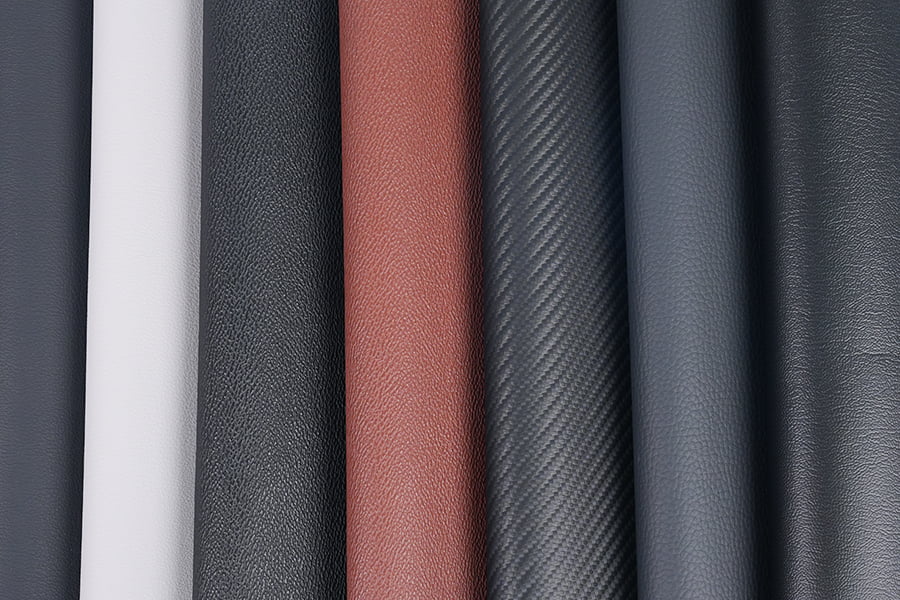 High Wear-Resistant PVC Car Interior LeatherHigh wear-resistant PVC car interior leather is a high-performance fabric designed for car interiors, suitable for a variety of interior decoration materials such as c...View Product →
For family seating, the winning combination is a soft-touch surface, resistance to stains from food and cosmetics, and a plasticizer package that stays put through years of body heat and pressure. Anti-stain topcoats and a denser backing solve most of the comfort complaints, and a higher-molecular-weight plasticizer removes the tackiness and ghost marking risk.
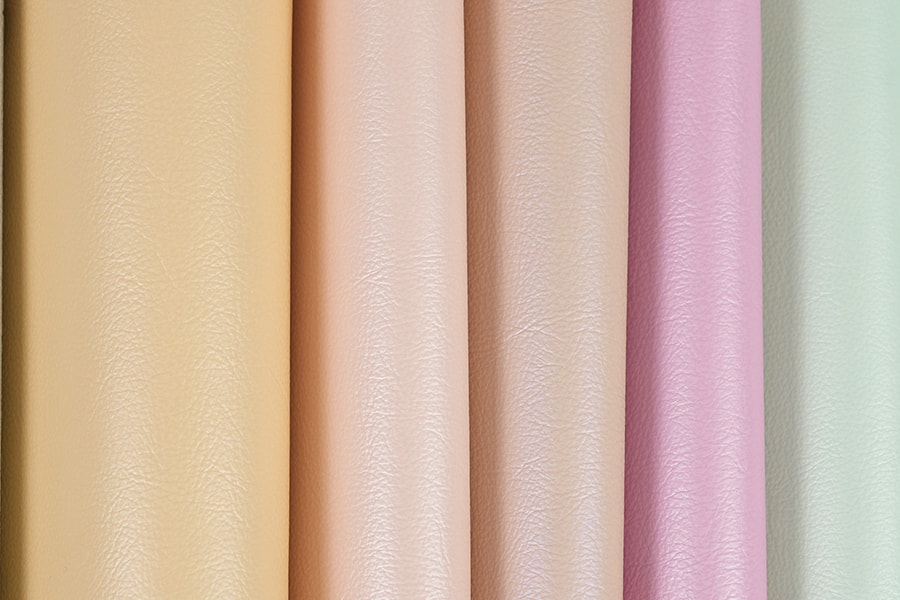 Soft-Touch Anti-Stain Faux Leather for SofasOur Soft-Touch Anti-Stain Faux Leather for Sofas is made from high-quality PVC/PU leather, boasting a fine, soft surface texture, a natural grain, and a comfortable fe...View Product →
Wall panels, headboards and shop fittings put the material in enclosed spaces where odor matters more than abrasion. Odorless compounds produced with low-volatility plasticizers and water-based topcoats pass the closed-jar panel test far more comfortably, which is exactly what specifiers for hotels, clinics and offices ask for first.
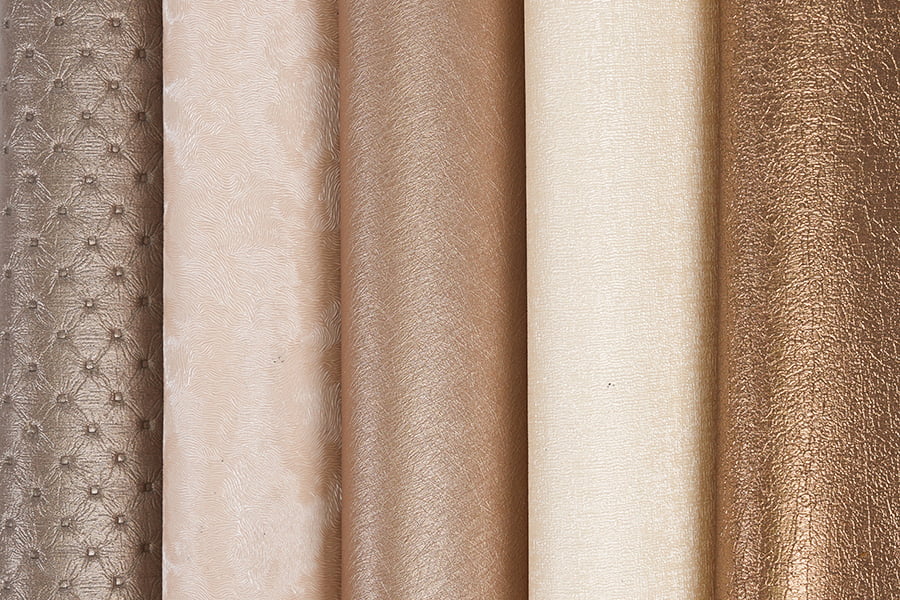 Environmentally Friendly Odorless Interior Decoration LeatherEnvironmentally friendly odorless interior decoration leather is a high-quality PVC artificial leather fabric designed for furniture and interior decoration. It has a ...View Product →
Beyond those three, PVC leather continues to serve luggage and bags where lightweight scratch resistance and a sharp embossed pattern matter, footwear where the challenge is breathability rather than durability, and fitness equipment where sweat, friction and flame retardancy dominate the requirement list. Each of those applications has its own way of managing the downsides listed above, and each deserves its own specification rather than a generic "PVC leather" line on a purchase order.
The most useful thing a buyer can do is stop specifying by trade name and start specifying by measured property. The table below is the working checklist we use when a customer asks for a compound that will not generate complaints.
| Property | Test approach | Suggested limit | What it prevents |
|---|---|---|---|
| Plasticizer volatility | 100 C for 24 hours, gravimetric | 1.0 percent or lower | Tackiness, late-stage cracking |
| Contact migration | 70 C for 24 hours against lacquered panel | No visible mark | Ghost marking on walls and shelves |
| Low temperature flex | Cold bend at minus 20 C | No crack, no whitening | Winter transport failures |
| Heat ageing | 100 C for 168 hours | Elongation retention 70 percent or higher | Hardening in service |
| Light fastness | QUV 400 hours | Grey scale 4, colour shift under 3 Delta E | Yellowing in daylight |
| Fogging | 100 C for 16 hours, gravimetric | 1.0 milligram or lower | Haze on glass and screens |
| Odour | Closed jar, 60 C, trained panel | 3 or lower on a 1 to 5 scale | Opening-day complaints |
| Restricted phthalates | Gas chromatography with mass detection | Below 0.05 percent each | Customs holds and recalls |
| Thickness tolerance | Micrometer, ten points across the roll | Plus or minus 0.05 millimetre | Weight surprises and seam problems |
| Coating adhesion | Cross hatch or peel test | No flaking after bending | Topcoat delamination |
Tolerances deserve one extra sentence, because they are where quiet money leaks. A thickness tolerance of plus or minus 0.05 millimetre on a one millimetre sheet sounds generous until you calculate what it means across a full container: the same nominal order can vary by several hundred kilograms. When freight is charged by weight and sewing yield is measured in metres, that tolerance is a commercial term, not a technical footnote.
The choice between material families is rarely about which one is better overall. It is about which failure mode your application can tolerate. A cold-chain luggage programme can live with a slightly heavier material but not with cracking at minus 20 degrees Celsius. A workshop bench covering can live with a firmer hand feel but not with solvent-based adhesive delamination.
| Behaviour | PVC leather | Polyurethane leather | Bio-based / recycled-content grades |
|---|---|---|---|
| Plasticizer dependence | High, and it drives migration risk | None in the same sense | Varies with the polymer base |
| Cold flexibility | Needs a dedicated cold-flex formula | Good by default | Improving, still formulation dependent |
| Hydrolysis in humid storage | Very low risk | Real risk with polyester grades | Depends on the backbone chemistry |
| UV and colour stability | Moderate, topcoat dependent | Generally better | Wide variation between suppliers |
| Relative material cost | Lowest | Higher | Highest |
| High frequency weldability | Excellent | Difficult or impossible | Usually difficult |
| End-of-life recyclability | Poor in laminated form | Poor to moderate | Better in theory, depends on the stream |
If you are weighing the two mainstream options, the differences go considerably deeper than softness and price, and it is worth reading a structured comparison of how PVC and polyurethane artificial leather behave in real service before locking a specification into a three-year supply agreement.
A specification only protects you if somebody checks the goods against it. The following routine takes under two hours per shipment and has prevented more disputes in our experience than any contractual clause.
Loading tells you how soft the material is. Type tells you how it will behave in three years, and it is the single most predictive question you can ask about migration.
An open ageing period of two to three weeks before wrapping dramatically reduces odor and block-on-roll problems. A supplier without an ageing plan is a supplier with an odor plan you will discover later.
Knit, woven and non-woven backings fail differently. A backing that grows or shrinks with humidity will pull a sewn seam apart even when the PVC skin itself is flawless.
Not by itself. A well formulated PVC leather with a high-molecular-weight or non-phthalate plasticizer, a stable topcoat and a dimensionally stable backing performs well for many years on domestic seating. The problems people attribute to the material usually trace back to an unspecified economy grade chosen on price alone, with no acceptance limits for migration, odor or cold flex.
It can, and there are two distinct pathways. The first is plasticizer loss, which stiffens the sheet until it fails at a fold. The second is cold cracking, which happens immediately when the material is folded below its low-temperature limit. Both are measurable before purchase through volatility loss and cold bend testing, and both are avoidable with the right compound.
The smell comes from residual plasticizer volatiles, solvent residues in the topcoat and printing, the stabiliser package and the backing adhesive. It usually fades within two to four weeks of open ageing, but tight wrapping and container transport trap those volatiles and release them in a concentrated burst on opening. Asking about pre-packing ageing time is the fastest way to predict the problem.
The PVC skin itself is waterproof, which is one of the material's genuine strengths. Water can still enter through stitch holes and through the backing, so a waterproof claim depends on seam construction as much as on the membrane. High frequency welding rather than stitching is what delivers a genuinely watertight join.
The base polymer is not the concern. The concern is the additive package, particularly certain phthalate plasticizers that are restricted in the European Union, the United States and other markets. A finished material verified below 0.05 percent for each restricted phthalate, supported by a current test report and a substances of very high concern declaration, is a defensible specification in most consumer markets.
Consider the range rather than a single figure. An economy grade in continuous sunlight may show hardening and colour shift within eighteen months. A properly specified interior grade typically holds appearance and flexibility for five to eight years of normal domestic use, and automotive grades are validated against substantially longer accelerated ageing programmes. The specification decides which end of that range you get.
At the material level, usually yes, often by 20 to 40 percent. When you price the finished product rather than the roll, the gap narrows considerably. Lighter PU rolls reduce freight, and where a heavier PVC compound causes premature replacement or a customer return, the difference disappears entirely. Total cost per year of service is the only meaningful comparison.
Press a sample against white lacquered board at 70 degrees Celsius for 24 hours and look for a mark. Weigh the sample before and after 24 hours at 100 degrees Celsius; a loss above roughly 1.5 percent signals a compound that will stiffen in service. Finally, bend a strip that has already been heat aged, because a compound can pass a cold bend when new and fail it after a season.
Mechanically, it is difficult, because the finished material is a bonded stack of topcoat, PVC skin, adhesive and textile backing that cannot be separated economically. Energy recovery with proper flue gas treatment handles it better than incineration in uncontrolled conditions. The most effective environmental strategy available today is to specify a durable, non-phthalate version and keep it in service for as long as possible.
It is the mainstream choice for many vehicle interior applications, and it is used at enormous scale. The conditions are strict: tight fogging limits, low volatile organic compound emissions, resistance to sunscreen and hand cream, high abrasion performance and reliable high frequency welding for panel joints. Those requirements are met by automotive-specific compounds, not by general upholstery grades relabelled for the purpose.
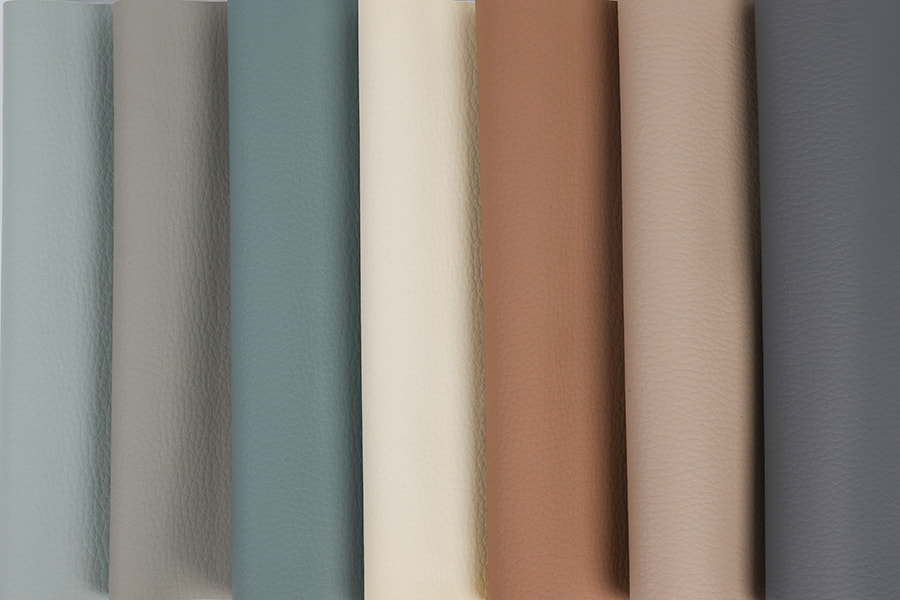
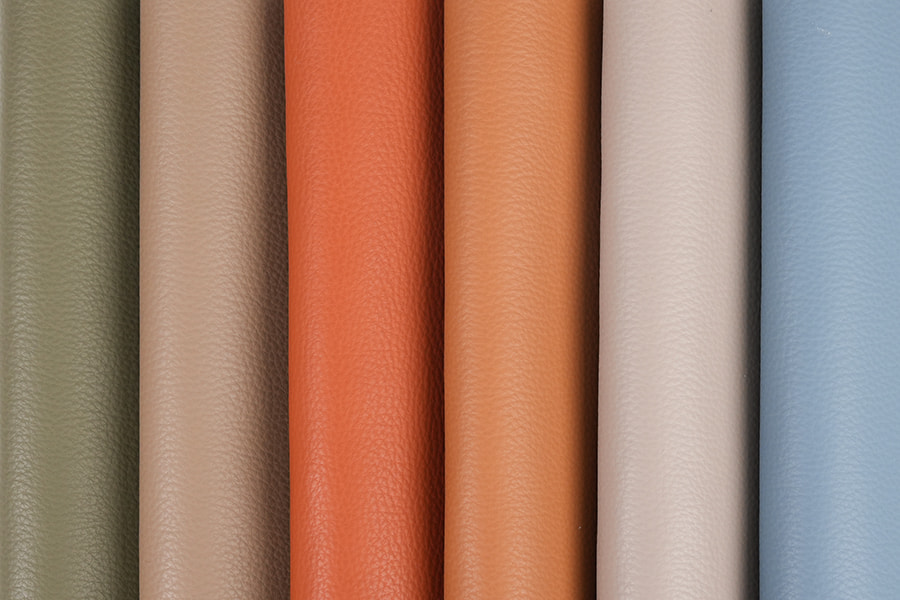
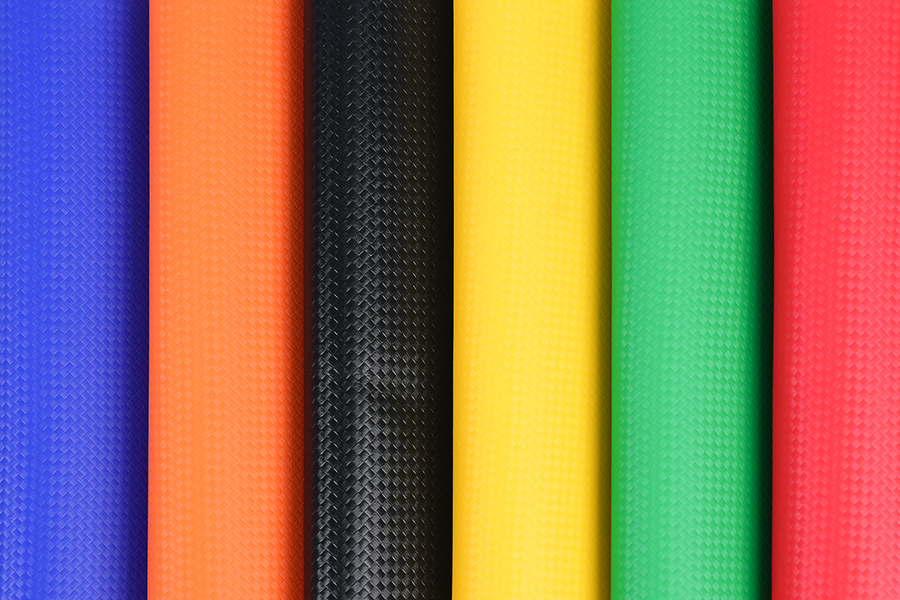
The Versatility of Sofa Artificial Leather in Different Home Decor Styles Sofa artificial leather has gained significant popularity as a material for home furniture, owing to its impressive versatilit...
View MoreIntroduction to Synthetic Leather What is Synthetic Leather? Definition and overview: Synthetic leather, also known as faux leather, vegan leather, or artificial leather, is a man-made material desig...
View MorePVC (Polyvinyl Chloride) and PU (Polyurethane) are two popular materials used in the production of automotive synthetic leather, each with its unique characteristics. Below are the key differences: Ma...
View MoreIntroduction of Synthetic Leather for Shoes What Is Synthetic Leather? Synthetic leather refers to any man-made material designed to imitate the appearance, texture, and qualities of genuine leather. ...
View MoreCopyright © Fu'an Synthetic Materials Co.,Ltd. Rights Reserved.
 Privacy
Custom PVC Synthetic/Artificial Leather Manufacturers
Privacy
Custom PVC Synthetic/Artificial Leather Manufacturers