language

Search

 中文简体
 English
 Español
 عربى
 Indonesia

Inquiry Now 
Content
Short answer: yes, PVC leather is durable and waterproof when it is well manufactured and correctly matched to the intended end use. The durability comes from its multi-layer construction: a fabric backing, a solid PVC coating, and a protective surface finish. The waterproof nature comes from the dense, non-porous top layer. But not every PVC leather behaves the same. As a synthetic leather manufacturer producing PVC-based materials for automotive, sofa, luggage, fitness, and footwear applications, we have seen exactly where these properties vary. This article explains the construction behind the claims, the performance tests that matter, and the care practices that help PVC leather age well.
PVC leather, also called polyvinyl chloride synthetic leather or vinyl leather, is an engineered material. A typical production process starts with a mixture of PVC resin, plasticizers, stabilizers, fillers, and color pigments. This mixture is layered onto a knitted, woven, or non-woven fabric backing, then heated and fused into a single sheet. The surface can be passed through embossing rollers to produce a leather-like grain or a smooth, micro-textured finish.
The durability of PVC leather is not accidental. It depends on how the different layers are compounded, bonded, and finished. A cheap sheet made with low-quality plasticizers and a thin base fabric may feel soft initially but will soon crack or peel. A properly engineered PVC leather behaves more like a composite membrane: the fabric takes tensile stress, the PVC body absorbs impact, and the surface coat handles abrasion and moisture.
| Layer | Function | Contribution to durability |
|---|---|---|
| Base fabric | Carries load and dimensional stability | Prevents tearing, stretching, and seam deformation |
| Adhesive / bonding layer | Fixes the PVC coating to the fabric | Prevents peeling and delamination |
| PVC coating layer | Main body of the material | Resists abrasion, impacts, and repeated flexing |
| Surface finish / top coat | Protective outer surface and texture | Repels water, stains, and scratches |
When buyers ask whether PVC leather is durable, the real question is whether the supplier has controlled these layers consistently. A responsible manufacturer documents base fabric weight, coating thickness, peel strength, and abrasion test results before releasing a batch.
PVC leather is recognized as one of the more durable synthetic leather options for high-traffic environments. Its closed, seamless surface resists scuffing, scratching, and repeated friction better than many open-textured textiles. The backing fabric gives the material tearing resistance, while the internal plasticizer package lets it flex without cracking.
Most durability failures in synthetic leather are not caused by the PVC itself. They are caused by poor adhesion between coating and base cloth, excessive filler load, or an inappropriate plasticizer for the use environment. That is why a simple visual inspection is not enough to judge a PVC leather roll. You need structural performance data from the supplier.
Closed surface resists everyday friction from seating, sliding, and handling.
Embedded fabric backing holds the sheet together at stitches, seams, and corners.
Correctly plasticized PVC can bend thousands of times without forming cracks.
Strong adhesion prevents the coating from lifting away from the backing.
From a manufacturing perspective, we treat peel strength as a quality gate. Every production batch is tested before leaving our plant. A sheet with a good surface appearance but low peel strength will eventually separate under heat, pressure, and movement. A sheet with a slightly rougher surface but high peel strength will keep functioning for years.
| Property | Typical range | Why it matters |
|---|---|---|
| Abrasion resistance | 50,000–100,000+ Martindale cycles | Surface does not wear through quickly |
| Tear strength | 80–150 N depending on thickness | Stitches and seams stay secure |
| Peel strength | 2.5–5.0 N/cm | Coating remains bonded to the backing |
| Low-temperature flex | -15 °C to -30 °C | Material resists cracking in cold climates |
These numbers are meant as reference ranges. The correct value depends on the application, thickness, required flexibility, and end-user expectations. When you source PVC leather for production, ask for the corresponding test report rather than relying on a photo or a sample swatch alone.
Yes, in normal use. Because the surface of PVC leather is non-porous, water sits on it in beads and can be wiped away without penetrating. Spills, rain exposure, and high-humidity environments are rarely a problem when the top coat is undamaged and the material is correctly hemmed or edge-sealed.
One nuance is important: PVC leather is surface-waterproof, not necessarily immersion-proof. If a cut edge is left bare, water can wick into the fabric backing and slowly travel across the inside of the material. The same can happen through unsealed stitching holes. For upholstery, luggage, and footwear, this can be managed by edge sealing, wrapping, or using seam-laminated film where water resistance is critical.
In practical terms, this means PVC leather is a strong choice for car interiors, sofas, dining chairs, luggage, fitness equipment, and any product that may face daily spills or wet wiping. It also explains why PVC synthetic leather is often selected for environments where hygiene and dirty cleanup are important.
Durability and water resistance are not abstract properties; they show up differently in each product category. The same base material can be formulated with different topcoats, fabric weights, and surface textures to suit particular end uses.
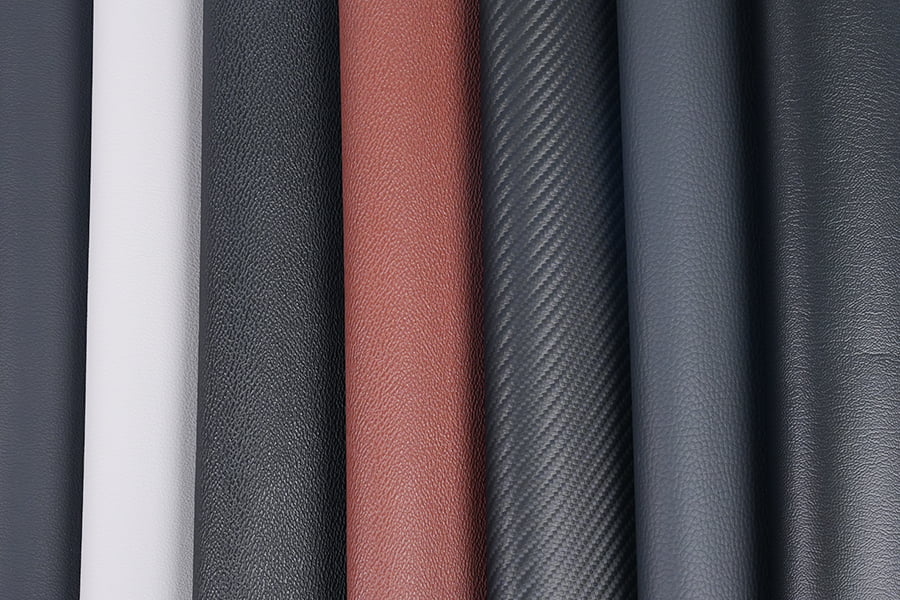 High-Wear-Resistant PVC Car Interior Leather for Automotive UpholsteryThis automotive-grade PVC/PU leather offers exceptional abrasion resistance, moisture resistance, and easy cleaning, making it ideal for seats, door panels, and other high-wear interior areas.View Product →
Car seats face daily sliding, seatbelt friction, UV exposure, and the occasional coffee spill. High-wear-resistant PVC car interior leather is designed with a thicker top coat and a dense backing that keeps the material stable through years of use. It does not soak up moisture, and it can be cleaned with the same mild detergent that is used on other interior surfaces. For automotive projects, the durability of the surface finish is often the deciding factor between a seat cover that begins to shine and one that keeps a matte, like-new appearance.
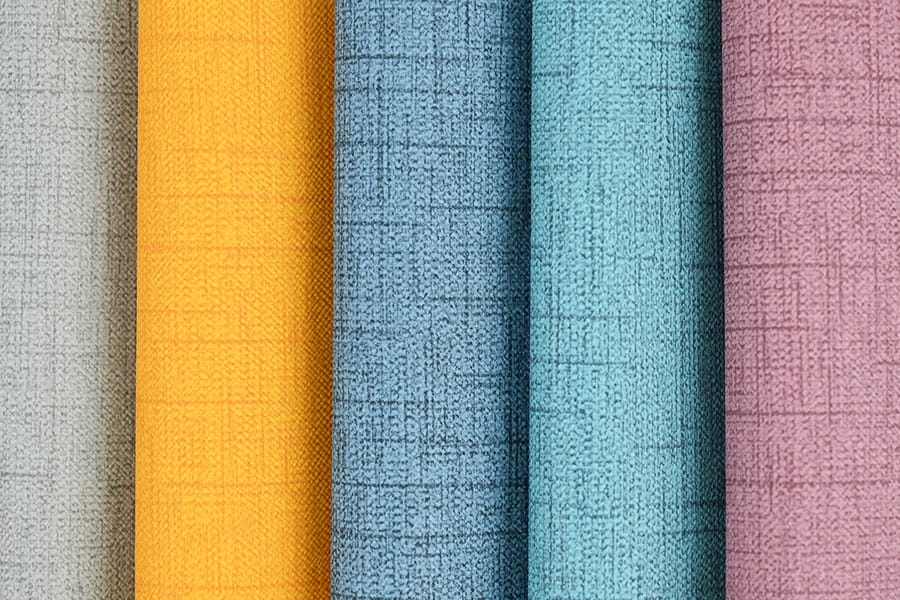 Anti-Peeling Durable Synthetic Leather for Sofa UpholsteryDesigned for sofas and upholstery, this synthetic leather features strong multi-layer bonding to prevent peeling, withstand daily wear, and resist spills, ideal for homes with kids or pets.View Product →
Sofas are exposed to repeated weight, movement, pet claws, food spills, and daily cleaning. Anti-peeling durable synthetic leather for sofas focuses on keeping the bond between coating and backing stable while providing a comfortable touch surface. PVC leather is also easy to wipe clean, which is a practical advantage for households with children or pets. The material remains the same even after years of use, unlike some textiles that fade and roughen in uncleaned areas.
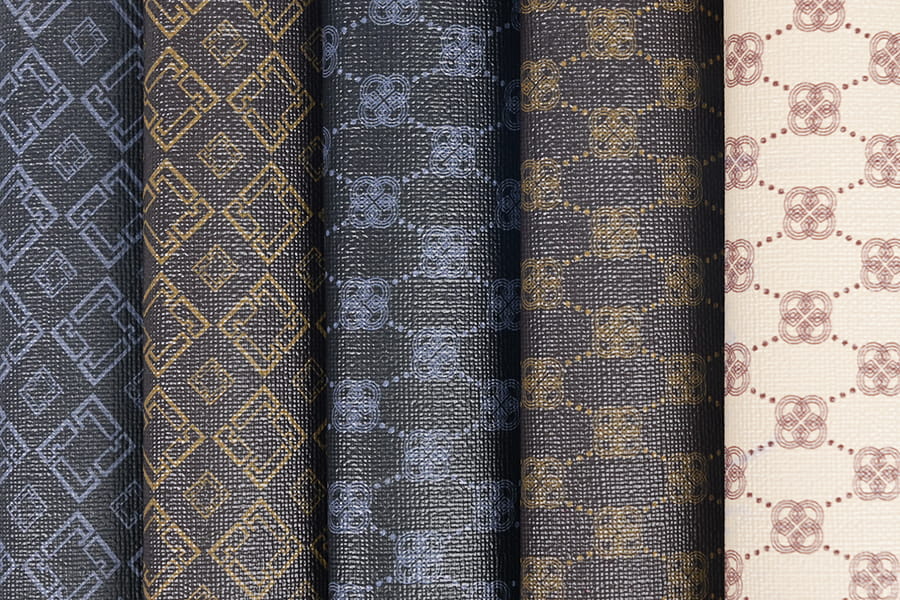 PVC Crocodile-Grain Leather for Luggage and BagsWith a deep embossed crocodile texture and water-resistant non-porous surface, this PVC leather provides premium aesthetics and durability, perfect for suitcases, handbags, and travel accessories.View Product →
Luggage is handled in rain, placed on wet floors, and scraped against conveyor belts. PVC luggage leather with a crocodile-grain texture offers visual depth while forming a strong protective shell around the case. The non-porous surface means that water does not penetrate the case from the outside, and the fabric backing gives the material enough tear strength to hold up during heavy packing. For bag makers, this combination of appearance and structural reliability is hard to achieve with many alternative materials.
Gym equipment is exposed to sweat, disinfectant sprays, and continuous friction. Sweat-proof and flame-retardant PVC leather grades are often specified for upholstered pads, benches, and handles. The material stays hygienic because liquid cannot soak into its surface, and it can withstand repeated wiping with antibacterial solutions without losing colour or flexibility.
Shoe uppers need to flex with every step, resist scuffs, and survive exposure to rain and puddles. Waterproof, lightweight PVC leather is used in sport-style footwear, children’s shoes, and work boots where easy cleaning matters. The material keeps moisture out from the upper section of the shoe, and the backing fabric provides structural stiffness for stitching and lasting operations.
Buyers sometimes compare PVC leather with PU leather or genuine leather. All three have different strengths, and the best choice depends on the product, budget, and required performance profile. The table below gives a neutral overview based on common manufacturing experience.
| Property | PVC leather | PU leather | Genuine leather |
|---|---|---|---|
| Durability | Very good under frequent use; strong backing; resistant to scuffs | Good; softer but can be less structural in some applications | Depends on hide quality; requires regular care |
| Water resistance | Excellent surface protection | Moderate; surface coating can be more breathable | Poor unless treated and maintained |
| Cleanability | Wipe clean with soap and water | Wipe clean with mild detergent | Needs special leather cleaners |
| Cost consistency | High uniformity across rolls | Good uniformity, usually higher cost | Variable with hide and grade |
| Maintenance | Low maintenance | Low to moderate | Regular conditioning required |
This table is not meant to be a rating of better or worse. It is a tool for understanding how each material behaves in an industrial or product design context. For many durable waterproof products, PVC leather is the practical choice because it combines predictable quality with cleanability.
When you receive PVC leather samples, you do not need a full laboratory setup to screen them. These quick checks will reveal the most common weaknesses.
For a more detailed evaluation, ask the supplier for abrasion test data, flex test data, and a peel strength certificate. These are standard quality measures for PVC synthetic leather and provide a clearer picture than any hand test.
PVC leather is low maintenance, but certain habits make a measurable difference in lifespan. The most important rule is to avoid solvent-based cleaners, abrasive sponges, and harsh degreasers. A soft cloth with warm water and a few drops of mild soap is enough for most cleaning. Wipe the surface dry after cleaning to prevent soap film from accumulating.
Direct sunlight and extreme heat are the two environmental factors that can damage PVC leather over time. Prolonged UV exposure can fade the colour, and high temperatures can accelerate plasticizer loss, which leads to stiffness. For outdoor or sunny indoor environments, choose a grade with UV stabilizers and low-temperature flexibility. For day-to-day care steps, see our detailed cleaning and maintenance guide.
Choosing a PVC leather supplier is a decision that affects product reliability, customer satisfaction, and production efficiency. Appearance matters, but hidden physical properties matter even more. A supplier who can clearly explain the construction and provide test data is usually more reliable than one who only sends a small swatch.
Below is a practical checklist that your sourcing team can use when evaluating a new material or manufacturer.
| Checkpoint | Why it matters | What to confirm |
|---|---|---|
| Base fabric weight | Controls tear resistance and dimensional stability | Ask the GSM of the knitted or woven backing |
| Coating thickness | Influences durability, feel, and abrasion resistance | Ask for total thickness in millimeters |
| Surface finish | Affects water resistance and cleaning behaviour | Confirm matte, gloss, or embossed texture options |
| Low-temperature flexibility | Prevent cold cracking and stiffening | Request a cold flex test result for your expected climate |
| Odour and emissions | Impacts indoor air quality and product acceptance | Ask for testing certificates or low-odour options |
| Backing type | Affects edge curling, stitching, and overall handling | Choose knitted, woven, or non-woven based on application |
In addition to checking specification sheets, consider asking for a visual and tactile standard sample from each production line. Colour consistency, surface pattern reproducibility, and uniform coating are quality indicators that excel sheets cannot show.
With quality construction and reasonable care, PVC leather can last 5 to 10 years for indoor seating and furniture, and longer for luggage or accessories that are not exposed to constant pressure. In commercial seating, the lifespan may be shorter due to heavier use, but the material usually remains functional until the surface shows signs of wear.
In ordinary use, yes. Water does not penetrate the surface. However, prolonged immersion can allow water to enter through cut edges, stitches, or damaged areas. If a product must survive full submersion, adding edge sealing or sealed seams is recommended.
Yes. A damp cloth with mild soap is the standard cleaning method. Avoid excess water on the surface and wipe dry afterward. This approach is safe for most PVC leather grades and does not damage the top coat.
Standard PVC leather can become stiff in extreme cold, but low-temperature flexible grades are available for cold climates. These use different plasticizer systems that maintain flexibility at temperatures such as -20 °C or -30 °C. Always specify the expected operating temperature when sourcing.
Yes. High-abrasion PVC leather with a strong backing and thicker top coat is commonly used in hospitality, healthcare, and waiting areas. The non-porous surface makes it easy to disinfect, which is another reason it is popular in public seating.
Peeling happens when the bond between the PVC coating and the backing fabric fails. Choose a supplier that provides peel strength data or a quality guarantee, and avoid materials designed only for extremely light use. Correct seam and stitching design in your own product also reduces stress at the edges.
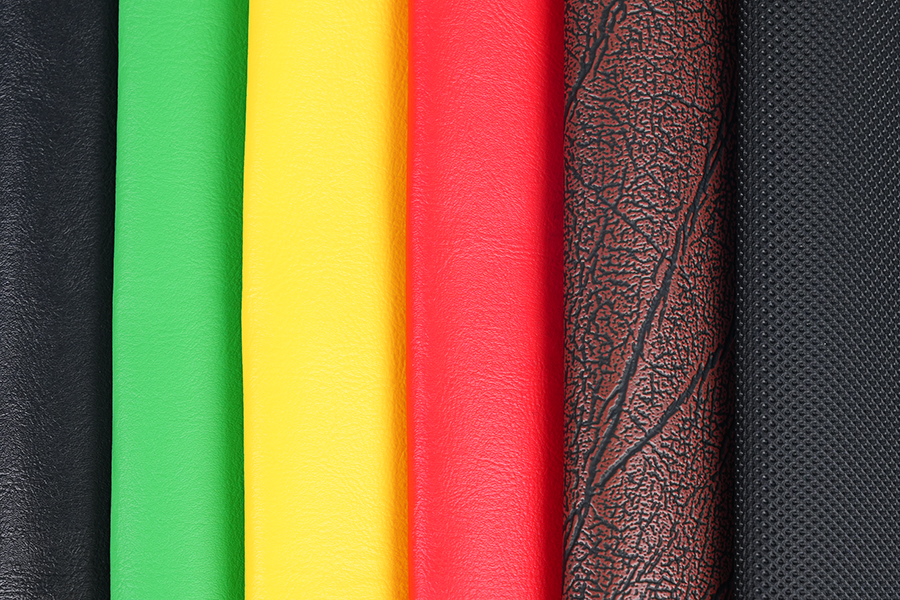
The Versatility of Sofa Artificial Leather in Different Home Decor Styles Sofa artificial leather has gained significant popularity as a material for home furniture, owing to its impressive versatilit...
View MoreIntroduction to Synthetic Leather What is Synthetic Leather? Definition and overview: Synthetic leather, also known as faux leather, vegan leather, or artificial leather, is a man-made material desig...
View MorePVC (Polyvinyl Chloride) and PU (Polyurethane) are two popular materials used in the production of automotive synthetic leather, each with its unique characteristics. Below are the key differences: Ma...
View MoreIntroduction of Synthetic Leather for Shoes What Is Synthetic Leather? Synthetic leather refers to any man-made material designed to imitate the appearance, texture, and qualities of genuine leather. ...
View MoreCopyright © Fu'an Synthetic Materials Co.,Ltd. Rights Reserved.
 Privacy
Custom PVC Synthetic/Artificial Leather Manufacturers