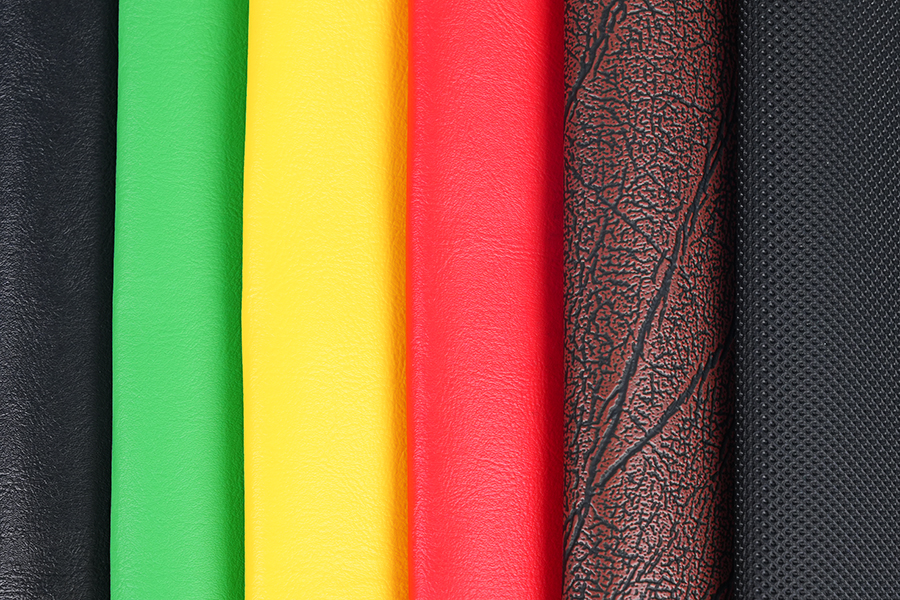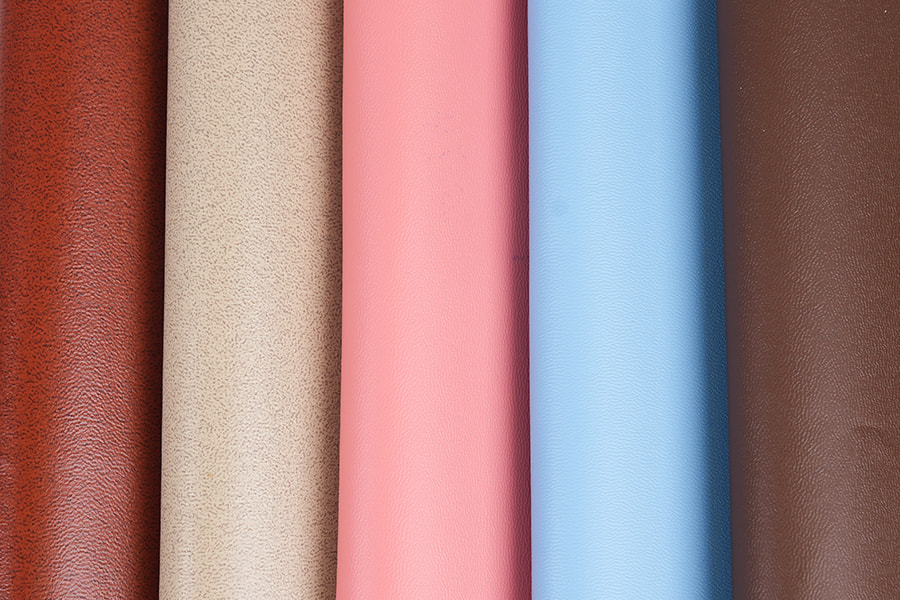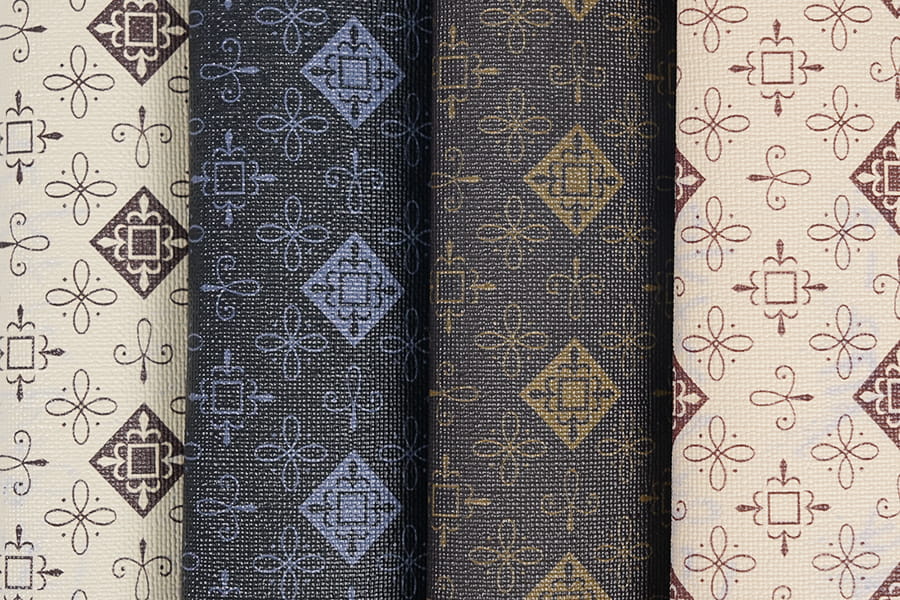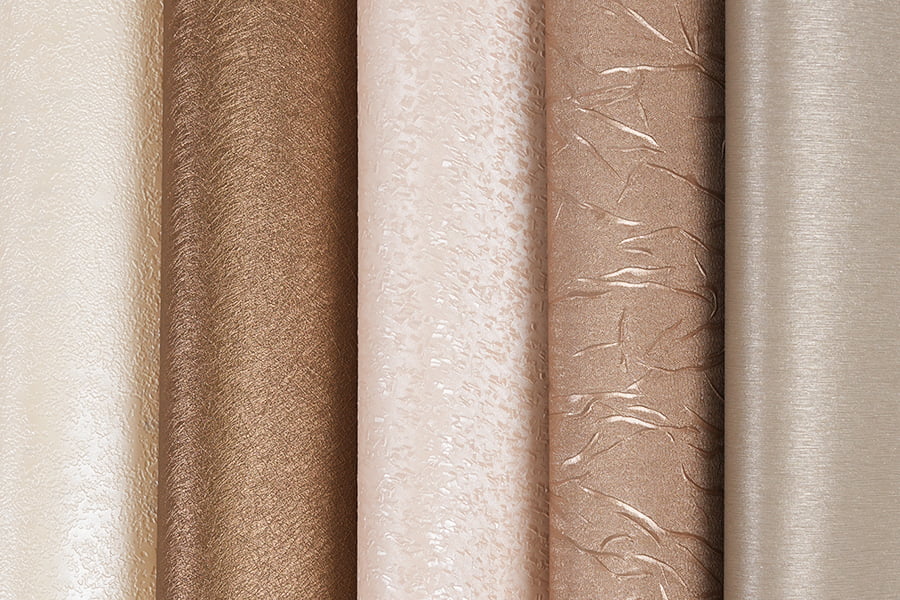
Seat Upholstery
Seat materials experience repeated contact, body pressure, friction and flexing around seams. Softness needs to remain balanced with surface durability.
Automotive PVC Synthetic Leather is an engineered upholstery material developed for seats, door panels, dashboards, armrests, center consoles and other interior trim surfaces. Its controlled grain, color consistency, cleanability and production stability make it suitable for vehicle programs that require reliable appearance and repeatable performance.
Automotive synthetic leather is a manufactured surface material designed to reproduce the visual character and tactile qualities associated with leather while providing controlled specifications for vehicle production. It commonly combines a woven, knitted or nonwoven textile backing with polymer coating layers.
The textile base supplies tensile strength, dimensional stability and support during cutting, sewing, wrapping and lamination. The polymer layers form the visible color, grain, softness, thickness and protective surface. Automotive synthetic leather can be adjusted for different vehicle zones rather than relying on one universal construction.
Seat center panels may require softness, flex resistance and breathability-related design considerations. Seat sides may need stronger abrasion and dimensional control. Door trim materials need reliable wrapping performance. Dashboard coverings require heat-aging stability, low gloss and resistance to visual distortion.
Synthetic leather in cars can provide dependable quality when its formulation, backing, surface finish and testing program match the intended interior component. Automotive quality should not be judged only by softness or visual grain.
The search question “what is synthetic leather made of automotive” is best answered by examining the function of each layer. Automotive PVC synthetic leather is normally a composite rather than a single sheet of PVC.
Controls surface gloss, touch, stain resistance, scratch resistance, cleaning behavior and resistance to color transfer.
Provides the primary color, grain definition, abrasion surface and visual uniformity of the finished automotive synthetic leather.
Adds controlled thickness, softness, compressibility and body. Foam density influences hand feel and forming performance.
Supports tear strength, seam stability, stretch control and compatibility with lamination, adhesive or upholstery processes.
PVC resin is blended with plasticizers, stabilizers, pigments, fillers and processing additives. The formulation influences softness, heat stability, odor, flexibility and surface durability.
Knitted, woven or nonwoven backing is selected according to stretch, tensile strength, lamination method and the shape of the intended automotive interior component.
PVC paste is applied to release paper or directly onto the textile. Coating weight, viscosity and line speed must remain stable across the usable width.
Controlled heating converts the coating into a continuous PVC layer. Foaming creates a cellular middle structure for cushioning and thickness.
Embossing or release-paper transfer creates leather grains, fine textures and geometric patterns. Surface treatment adjusts gloss and touch.
Finished rolls are checked for color, thickness, usable width, surface defects, grain consistency, bonding strength and application-specific performance.
Automotive luxury synthetic leather is not defined by gloss or softness alone. Luxury appearance is created through coordinated control of grain scale, grain depth, color tone, surface reflectance, touch and seam presentation.
Fine grains often create a clean and modern appearance. Deeper grains can provide a more pronounced leather character. Low-gloss surfaces help reduce strong reflections on dashboards and upper door panels. A dry or silky touch may be selected for frequently contacted zones.
Automotive luxury synthetic comfort leather also needs suitable cushioning, temperature response and flex performance. An excessively soft surface may wrinkle during wrapping. An excessively rigid construction may be difficult to sew or form around complex shapes.
Testing requirements depend on the interior component, vehicle specification and regional standard. The following items are commonly reviewed during material development.
Values should be determined by the specific vehicle part and approved test method. General purchasing descriptions without test conditions may not provide enough production control.
| Specification Item | Common Design Options | Automotive Relevance |
|---|---|---|
| Total thickness | Selected according to seat, panel or trim construction | Influences body, softness, forming and seam appearance |
| Textile backing | Knitted, woven, nonwoven or laminated backing | Controls stretch, tear strength and process compatibility |
| Surface grain | Fine grain, medium grain, deep grain or smooth finish | Defines visual character and perceived interior quality |
| Gloss level | Low gloss, matte or semi-matte | Supports appearance control and reflection management |
| Surface touch | Dry, silky, smooth, firm or soft | Affects comfort in frequently contacted areas |
| Color tolerance | Controlled against an approved standard sample | Maintains consistency across interior components |
| Abrasion performance | Defined by vehicle or component requirement | Important for seats, armrests and door-contact areas |
| Aging performance | Heat, light and low-temperature testing | Supports long-term interior appearance and flexibility |
| Special requirements | Flame resistance, odor, fogging and stain control | Addresses specific vehicle interior standards |
Different parts of the vehicle interior create different mechanical, thermal and visual demands. Material specifications should be developed by component rather than by color alone.
Seat materials experience repeated contact, body pressure, friction and flexing around seams. Softness needs to remain balanced with surface durability.
Door panel materials need controlled stretch and reliable adhesion for wrapping over shaped substrates and decorative inserts.
Dashboard surfaces are exposed to heat and light. Low-gloss appearance and dimensional stability are particularly important.
These high-contact areas require a comfortable surface that resists skin oils, repeated wiping and localized pressure.
Complex shapes require suitable stretch, recovery and seam stability while maintaining uniform color and grain.
The automotive interior genuine leather and synthetic leather market includes materials developed for different vehicle categories, design targets, production volumes and maintenance expectations. Genuine leather and synthetic leather should be evaluated according to the intended component rather than treated as identical materials.
Offers controlled color, grain, thickness and roll dimensions. It is commonly selected for water resistance, cleanability and repeatable large-scale processing.
Different polymer systems may emphasize softness, lightweight construction, flexibility or specialized surface properties.
Provides a natural fiber structure and individual grain variation. Processing and maintenance requirements depend on leather type and finishing system.
| Comparison Area | Automotive PVC Synthetic Leather | Automotive Genuine Leather |
|---|---|---|
| Material structure | PVC layers combined with engineered textile backing | Natural animal hide with processed fiber structure |
| Color consistency | Highly controllable across approved batches | Natural variations may remain visible |
| Grain control | Grain depth and pattern can be engineered | Influenced by hide quality and finishing |
| Water resistance | Generally strong with an intact surface coating | Depends on finishing and maintenance |
| Cleaning behavior | Usually designed for routine wiping | May require more specialized care |
| Roll utilization | Predictable width and surface consistency | Natural shape and defects influence cutting yield |
| Production repeatability | Suitable for controlled high-volume manufacturing | Material selection and sorting are more variable |
Top rated synthetic leather manufacturers for automotive upholstery should be evaluated through technical capability, process control and application understanding rather than promotional claims alone.
The manufacturer should distinguish between seat, door, dashboard and console requirements and recommend different constructions where necessary.
Product specifications should identify backing type, thickness, usable width, grain, surface finish and relevant testing requirements.
Color, gloss, grain depth, touch and thickness should remain within agreed tolerances from approved sample to production roll.
Recommendations should consider cutting, sewing, perforating, lamination, vacuum forming, adhesive bonding and wrapping processes.
Abrasion, flex, heat aging, light fastness, fogging, odor and flame testing should be aligned with the final automotive component.
Approved samples should be connected to formulation, grain, backing and finishing records to reduce differences during repeat production.
Accurate product information allows the material structure to be matched to the vehicle component and manufacturing process.
It can be durable when abrasion resistance, flex resistance, coating adhesion and environmental aging are matched to the vehicle component. Seat surfaces normally require different performance from decorative side panels.
Automotive synthetic leather generally combines a textile backing with one or more polymer layers. PVC constructions may include a foamed cushioning layer, compact colored surface and protective top finish.
Yes. Perforation patterns can be developed for visual design, seat construction or airflow-related requirements. Hole size, spacing, backing and coating structure need to suit the perforation process.
Color, grain, gloss, touch, thickness, backing and selected functional properties can be customized according to an approved sample and technical specification.
Low-gloss surfaces reduce strong visual reflections and help maintain a refined appearance on dashboards, upper door panels and other areas exposed to direct light.
Confirm the vehicle component, processing method, thickness, backing, color, grain, gloss, touch, physical performance and required automotive testing.
A practical automotive synthetic leather specification begins with the location of use. Seat upholstery, dashboards, door panels and center consoles create different demands for stretch, abrasion, temperature resistance and appearance.
The Versatility of Sofa Artificial Leather in Different Home Decor Styles Sofa artificial leather has gained significant popularity as a material for home furniture, owing to its impressive versatilit...
View MoreIntroduction to Synthetic Leather What is Synthetic Leather? Definition and overview: Synthetic leather, also known as faux leather, vegan leather, or artificial leather, is a man-made material desig...
View MorePVC (Polyvinyl Chloride) and PU (Polyurethane) are two popular materials used in the production of automotive synthetic leather, each with its unique characteristics. Below are the key differences: Ma...
View MoreIntroduction of Synthetic Leather for Shoes What Is Synthetic Leather? Synthetic leather refers to any man-made material designed to imitate the appearance, texture, and qualities of genuine leather. ...
View More