language

Search

 中文简体
 English
 Español
 عربى
 Indonesia

Inquiry Now 
Content
Fogging and abrasion are two first-gate material properties for automotive interior leather, and they are tested for different reasons. Fogging measures condensable volatile matter that can deposit a haze on interior glass. Abrasion measures how a surface responds to repeated rubbing, scuffing and contact. A PVC synthetic leather can meet both requirements, but the result depends on compound selection, coating design, surface treatment, drying and quality control rather than on the word “PVC” alone.
For automotive programs, the practical answer is this: specify the test method, the conditioning route, the specimen construction and the acceptance limit before sampling. A supplier can meet a tight abrasion cycle count and still fail fogging if volatile plasticizers, process oils or incomplete curing are present. Equally, a low-fogging material can show early surface wear if the topcoat is too thin or the embossing pattern creates thin walls. Buyers should treat fogging and abrasion as a paired approval gate, not as isolated lab numbers.
Fogging is the condensation of volatile or semi-volatile substances released from interior materials under heat. In a vehicle cabin, the windscreen and instrument-cluster lens are cooled by the outside environment while the dashboard, seat and trim surfaces can become warm. Volatile matter from leather, foam, adhesive, paint and plastic parts can migrate to the cooler glass and form a thin film. That film reduces optical clarity, can affect camera or sensor windows, and is difficult to clean without repeated removal of the same deposit.
Fogging is not the same as odor, total VOC or visible smoke. An interior material can have a low odor score and still produce a measurable fogging deposit. The test therefore focuses on condensable matter under controlled heating and cooling. For PVC synthetic leather, the main variables are plasticizer volatility, stabilizer package, residual processing aids, coating weight, topcoat chemistry and the completeness of drying and curing. A well-controlled PVC compound can be formulated for low fogging while keeping the flexibility, embossing depth and wear resistance expected in cabin trim.
Because fogging is a system property, the tested specimen should match the production construction. A film sample alone may not represent a finished laminate with base fabric, adhesive, foam backing or a printed surface. If the final part includes a foam layer or adhesive, those layers should be included in the qualification plan or tested separately under the same program. This is especially important for door inserts, console lids and seat bolsters where several materials are bonded together.
There is no single global fogging number that applies to every vehicle program. OEM specifications, part location, colour, surface gloss and material thickness all influence the limit. The test method, however, is usually drawn from a small group of recognized standards. The table below summarizes the common methods and what a buyer should ask to see in the report. The values in the “typical program language” column are examples of how specifications are written, not universal pass marks.
| Method | Principle | Typical program language | What to verify |
|---|---|---|---|
| DIN 75201 Method A | Gravimetric measurement of condensable matter collected on a cooled glass plate. | Often expressed as a maximum milligram deposit, with limits set by the OEM and part. | Specimen mass, heating temperature, heating time, cooling-plate temperature, conditioning and reported unit. |
| DIN 75201 Method B | Reflectometric measurement of haze or reflection change on a cooled glass plate. | Often expressed as a minimum percentage reflectance or a maximum haze value. | Glass cleaning procedure, instrument calibration, measurement angle and whether the result is a percentage or a rating. |
| ISO 6452 | International fogging method used across interior trim materials. | Limits are written into the material specification and may follow DIN-style gravimetric or reflectometric reporting. | Whether the lab report states ISO 6452 directly and whether the sample is finished leather or a full laminate. |
| SAE J1756 | North American fogging method for interior materials. | Commonly tied to OEM material specifications and part-level validation plans. | Sample orientation, conditioning, test duration and the acceptance value stated in the drawing or material spec. |
| VDA 278 | Thermal desorption analysis of volatile and semi-volatile organic emissions. | Used where the program needs VOC and fogging-related emission data in addition to a fogging plate test. | Whether the method is being used as a screening tool or as a contractual release test, and how results are interpreted. |
A practical specification should state the method, the exact specimen build, the conditioning time and the acceptance limit. For example, “DIN 75201 Method A on finished PVC synthetic leather, conditioned 24 hours at 23°C and 50% relative humidity, maximum 1.0 mg” is more useful than “low fogging” alone. The first version can be quoted, sampled and repeated; the second cannot.
Many automotive programs use a gravimetric target in the range of 1.0 mg to 2.0 mg, or a reflectometric target of at least 90% reflectance, but these figures should not be copied blindly. A door panel, seat cover and instrument-panel skin may have different limits because they have different surface areas, textures and proximity to glass. The correct approach is to obtain the OEM material specification or the tier-one drawing and translate it into a controlled test request.
Abrasion testing simulates repeated contact between the leather surface and clothing, hands, luggage, seat belts or cleaning cloths. The result is not simply “how many cycles before a hole appears.” Automotive evaluations usually record surface change, colour change, gloss change, weight loss, fibre exposure, coating removal and the first visible sign of damage. A material that survives a high cycle count but looks polished or discoloured early may still be rejected.
Martindale abrasion is widely used for upholstery and trim. A specimen is rubbed against a standard abradant under a defined load, and the test continues for a specified number of cycles or until a defined end point. Martindale is useful for comparing surface durability across PVC synthetic leather constructions because it can be run dry or wet and can be assessed visually against a reference. Buyers should confirm the abradant type, load, specimen diameter, assessment interval and whether the result is based on hole formation, surface wear or appearance change.
Taber abrasion uses a rotating specimen under abrasive wheels. It is often used for coating and film durability because weight loss and surface wear can be measured with good repeatability. For automotive leather, Taber results are most useful when the test conditions match the material thickness and the expected contact severity. A Taber number without the wheel type, load, cycle count and evaluation criterion is difficult to compare across suppliers.
Wyzenbeek abrasion uses a back-and-forth rubbing action. It is common in upholstery specifications and can be useful for seat and armrest surfaces that receive directional rubbing. As with Martindale, the pass criterion should be defined in advance: 15,000 double rubs with no visible wear is not the same claim as 50,000 double rubs with slight colour change accepted at a stated level.
For PVC synthetic leather, abrasion performance is influenced by topcoat thickness, topcoat adhesion, plasticizer migration control, filler loading, embossing depth and surface finish. A deep emboss can create attractive grain, but it can also create thin high points that wear first. A smooth, dense topcoat may resist scuffing well, but it must still meet the required touch, gloss and fold behaviour. The successful construction balances these factors rather than maximizing one lab number.
Seat cushions, side bolsters, door armrests and instrument-panel skins do not see the same wear. A single abrasion target for every part can lead to over-specification in low-contact areas and under-specification in high-contact areas. The chart below is a qualitative planning aid, not a substitute for the OEM specification. It helps a buyer decide where to ask for higher cycle counts, tighter surface-change criteria or additional wet-abrasion testing.
High-frequency contact with clothing, belts and body movement. Ask for abrasion data on the finished laminate, including the foam or backing if used. Check colour change and surface gloss, not only hole formation.
Repeated hand and elbow contact, plus cleaning. A tight topcoat and good adhesion are important. Wet-abrasion data can be useful where spills and cleaning are expected.
Lower direct rubbing than a seat, but high visual importance. Fogging and gloss control may matter more than extreme abrasion cycles. Validate the complete skin, including any primer or adhesive.
Lower contact severity allows a cost-effective construction, but the material still needs consistent colour, foldability and cleanability. Do not let a lower abrasion target compromise basic surface integrity.
For a high-wear automotive PVC construction, the product specification should identify the topcoat, base fabric and embossing that will be used in serial production. A sample that passes only because it has a heavier coating than the quoted product is not a valid approval.
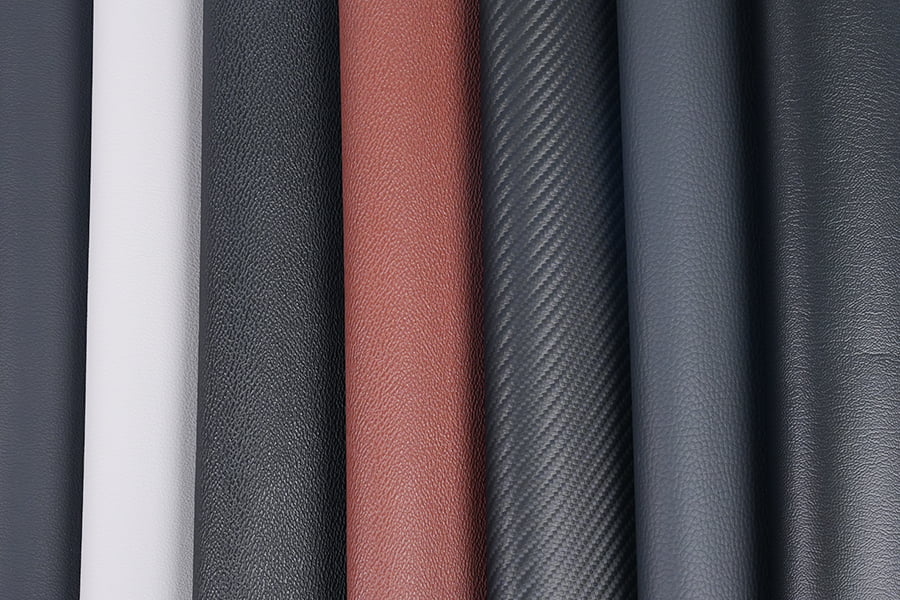 High Wear-Resistant PVC Automotive Interior LeatherHigh-wear PVC automotive upholstery with customizable backing, embossing and topcoat options, suited to matching serial-production specifications.View Product →
PVC synthetic leather is a engineered composite: a base fabric, a PVC coating or foam layer, a colour layer, a topcoat and an embossed surface. Fogging and abrasion are affected by every one of those layers. The compound should use plasticizers and stabilizers selected for low volatility under cabin heat. The coating line should control gelation, drying and cooling so that residual volatiles are minimized. The topcoat should be thick enough and properly cured to resist scuffing without becoming stiff or glossy in an unnatural way.
Abrasion resistance is often improved by increasing topcoat integrity, optimizing filler particle size, controlling plasticizer migration and choosing an embossing pattern that does not create weak high points. Fogging resistance is often improved by removing low-volatility-controlling impurities, extending drying, avoiding contaminated process oil and validating every raw-material change. These are not opposing goals. A manufacturer with a disciplined formulation and process window can deliver both.
Fu’an Synthetic Materials operates as a manufacturer of ecological synthetic leather and artificial leather, with an annual capacity of 20 million square meters and a product range covering automotive interior leather, sofa leather, interior decoration leather, bag and luggage leather, shoe-upper leather and fitness-equipment leather. The automotive PVC synthetic leather range is developed around wear resistance, surface appearance and process consistency. For buyers, the relevant point is not a generic company claim; it is whether the specific construction can provide a test report, a stable formulation and a production sample that matches the approved lab coupon.
Plasticizer, stabilizer, resin, filler and colour paste are reviewed for volatility, compatibility and lot-to-lot consistency.
Mixing order, temperature and dispersion are controlled so the coating does not carry unmelted or volatile fractions.
Coating weight, gelation and drying profile are set to build adhesion and remove residual process volatiles.
Embossing, topcoat cure and final inspection are linked to fogging and abrasion release checks.
A clear specification reduces the risk of a late-program surprise. The list below can be used when requesting samples, comparing quotations or reviewing a pre-production report. It is written for automotive PVC synthetic leather, but the logic applies to other interior trim materials as well.
Test reports often look similar at a glance, but the details determine whether the result is relevant. First check the method and the specimen description. A fogging result from a thin film may not represent a finished PVC synthetic leather with a fabric backing. An abrasion result from an unembossed lab sheet may not represent a deep-grain production surface. Second, check the conditioning and test duration. Third, check the reported unit and the acceptance limit. A result of “0.8” means little if the unit is missing.
The report should name the standard and the method letter or part. If the OEM specification references an older edition, the lab should state how it was applied.
Look for colour, thickness, coating weight, backing type and embossing. These details connect the coupon to the product that will be shipped.
A useful report shows the measured value, the specification limit and the margin. It should also identify any retest or outlier and explain the reason.
Abrasion reports are stronger with before-and-after images. Fogging reports are stronger with plate images or instrument traces where available.
A report should also identify the laboratory, date, operator, equipment and calibration status where the program requires it. For incoming inspection, keep a retention sample from the same lot. If a future production batch shows a different surface feel or a slight gloss shift, the retention sample helps determine whether the change is cosmetic or a real process drift.
Most fogging and abrasion issues are process-control issues, not mysterious material failures. The risk grid below links a symptom to a likely cause and a practical corrective lever. It is intended for technical review between buyer, material engineer and production team.
Likely cause: volatile plasticizer fraction, residual solvent or process oil, incomplete drying, contamination in the compound.
Corrective lever: review raw-material volatility, extend drying or curing, audit oil and cleaning agents, and re-test the finished laminate rather than only the film.
Likely cause: thin topcoat, incomplete topcoat cure, weak adhesion between coating and base fabric, embossing high points.
Corrective lever: adjust topcoat weight and cure, review adhesion, refine embossing depth, and set a visual acceptance standard with reference photographs.
Likely cause: surface additive migration, pigment dispersion issue, topcoat burnishing, or cleaning-agent interaction.
Corrective lever: review additive package and pigment paste, test after cleaning, and define gloss and colour tolerances in the specification.
Likely cause: lab sample not matching production coating weight, embossing roll or backing fabric.
Corrective lever: lock the approved construction, compare retained samples, and require production-lot verification before shipment release.
A corrective action should be verified with the same method and specimen build that failed. Changing the test method to obtain a pass weakens the approval. If the OEM specification allows a different method for a specific part, record that allowance in the drawing and in the test request.
Fogging and abrasion are important, but they are not the whole material approval. Automotive interior leather may also be reviewed for flame retardancy, cold flexibility, colourfastness to light and rubbing, cleaning resistance, odour, volatile organic compounds and adhesion. These properties interact. A topcoat change made to improve abrasion can alter gloss or fogging. A plasticizer change made to reduce fogging can affect cold flex and surface feel. A colour-paste change can affect lightfastness and cleaning behaviour.
For this reason, the material specification should be managed as a set of linked requirements. When a formulation change is proposed, the supplier should state which properties were re-tested and which were only reviewed by similarity. Buyers should ask for a change matrix, not a single updated certificate. For related approval work, see our note on automotive flame-retardant standards, and use it alongside the fogging and abrasion plan rather than as a replacement.
Cold flexibility is particularly relevant for PVC synthetic leather used on seat bolsters, door inserts and wrapped components. A material that is flexible at room temperature may behave differently when the cabin is cold. Abrasion testing at standard lab conditions does not automatically predict cold-fold performance. The buyer should include a cold-flex or low-temperature fold check in the validation plan where the part geometry requires it.
There is no universal limit. Many programs use a gravimetric target around 1.0 mg to 2.0 mg, or a reflectometric target of at least 90% reflectance, but the actual value comes from the OEM material specification and the part location. The method and specimen build must be stated with the limit.
They are related fogging methods but not identical documents. A report should name the exact standard and method used. If the OEM specification calls for DIN 75201 Method A, an ISO 6452 report should not be accepted automatically without a technical review.
The cycle count depends on the touchpoint and the OEM requirement. Seat bolsters and cushions usually need higher performance than lower trim. More important than the headline number is the failure criterion: hole, coating removal, colour change, gloss change or visual rating. Specify both the cycles and the assessment standard.
Yes. Fogging performance is controlled by plasticizer volatility, stabilizer selection, compound purity, drying and curing. A PVC synthetic leather construction developed for automotive interior use can be tested to DIN 75201, ISO 6452 or the OEM method and released against the agreed limit.
Test the construction that will be used in production. If the part includes adhesive, foam or a primer, those layers can contribute to fogging. A film-only result may be useful for development, but it is not a complete approval for a bonded finished part.
The two properties respond to different variables. A strong topcoat can improve abrasion while volatile matter in the compound, primer or process oil can still condense on the fogging plate. Abrasion and fogging should therefore be tested as separate release criteria on the same approved construction.
Re-test after any change in raw material, formulation, coating weight, topcoat, embossing, base fabric or curing profile. For routine production, the frequency should follow the customer’s quality agreement and the supplier’s control plan. Retention samples from each production lot make trend review more reliable.
Request the test method, specimen description, conditioning record, raw result, acceptance limit, pass or fail statement, laboratory identification, test date and photographs where applicable. Also request batch traceability and a change-control statement so the approved sample can be linked to serial production.
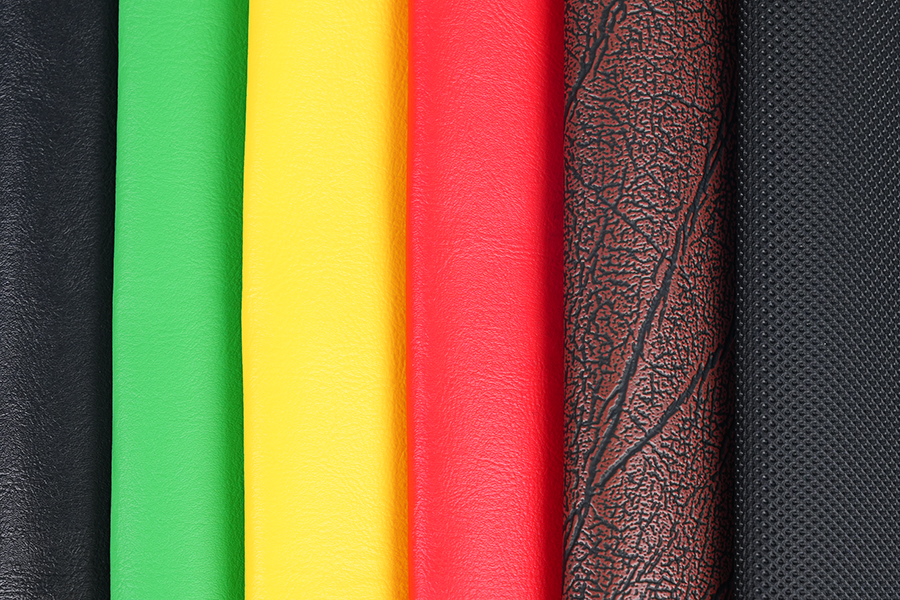
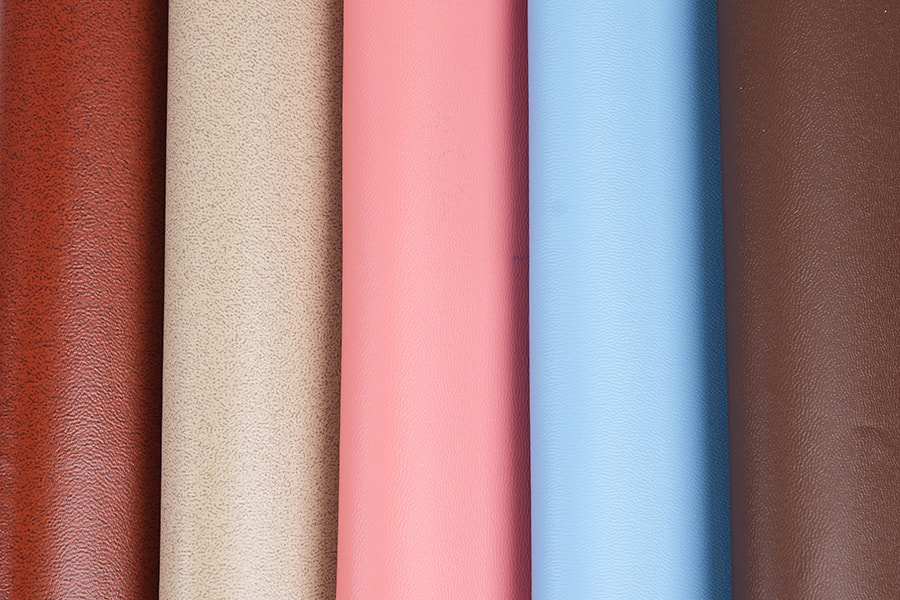
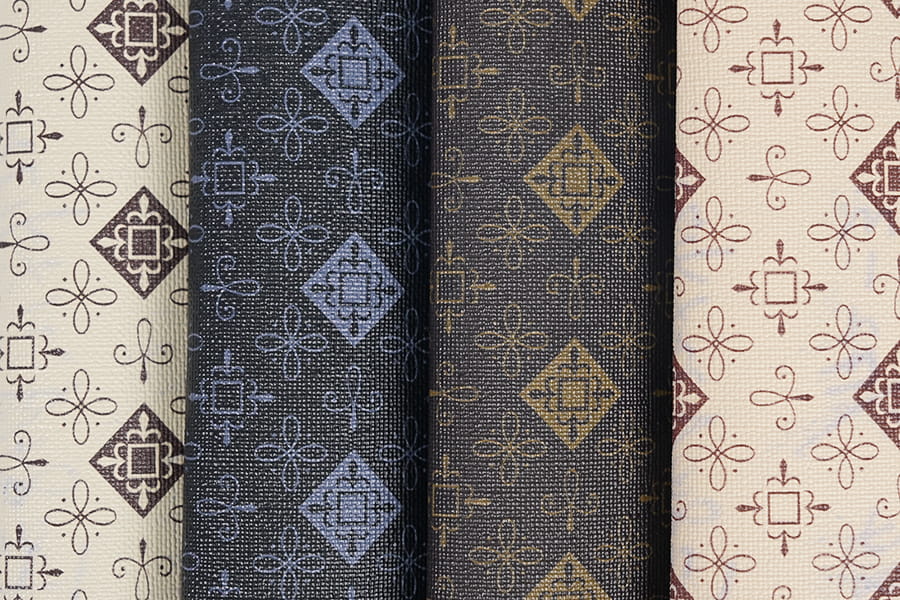
The Versatility of Sofa Artificial Leather in Different Home Decor Styles Sofa artificial leather has gained significant popularity as a material for home furniture, owing to its impressive versatilit...
View MoreIntroduction to Synthetic Leather What is Synthetic Leather? Definition and overview: Synthetic leather, also known as faux leather, vegan leather, or artificial leather, is a man-made material desig...
View MorePVC (Polyvinyl Chloride) and PU (Polyurethane) are two popular materials used in the production of automotive synthetic leather, each with its unique characteristics. Below are the key differences: Ma...
View MoreIntroduction of Synthetic Leather for Shoes What Is Synthetic Leather? Synthetic leather refers to any man-made material designed to imitate the appearance, texture, and qualities of genuine leather. ...
View MoreCopyright © Fu'an Synthetic Materials Co.,Ltd. Rights Reserved.
 Privacy
Custom PVC Synthetic/Artificial Leather Manufacturers